
The Environmental Management Authority (EMA) has awarded a certificate of environmental destruction for one of Tobago’s most unique and beautiful places. This was done against formal scientific advice from its own expert review committee and procedure, and against wishes of the local community and public submissions in the approvals process. How did the EMA come to betray Rocky Point and the inheritance of future generations of Tobagonians? By Mark Meredith
On April 28, to great fanfare and publicity on social media and releases to the press, the Certificate of Environmental Clearance (CEC) that grants the developer approval to begin construction works at Rocky Point was awarded, even though its review committee continued to flag unacceptably high environmental risk. Their reports indicate that impacts on the marine and coastal environment remain inadequately addressed in the Environmental Impact Assessment (EIA).
The EMA’s Review and Assessment Report (RAR) identified (very many) deficiencies in the EIA prepared by Superior Hotels. The developer is supposed to give their responses to those criticisms, which should include the necessary alterations to the EIA.
A letter from the EMA to Superior Hotels on January 26 said it had “identified several deficiencies (in the EIA), which must be addressed”. It was “unable to make a determination of your application at this time” and could only do so “when the issues highlighted in the RAR are properly addressed”.
It is the purpose of the EMA’s review committee to examine responses of the applicant to their criticisms in the RAR and determine, in the EMA’s own words, whether deficiencies in the EIA are “comprehensively” addressed.
In the case of Rocky Point this failed to happen.
“The Applicant has merely amended descriptions while the major activities continue to stand unmitigated and unchanged from the first round of review,” according to the the Institute of Marine Affairs’ (IMA) review to the Committee.
I learned, during this review period, that some members of the EMA’s review committee felt constrained by tight timelines – also that the turnaround period for Superior Hotels’ Response to the RAR was unusually short, only one month, compared to other developments of similar sizes, which typically takes several months to years.
Then, without any communication by the EMA to review committee members, the CEC was suddenly awarded and the development given the go ahead – but without the necessary modifications made to the EIA based on comments from stakeholders, in public consultations, the THA, and the EMA’s own RAR.
This procedure contradicts what the EMA told me on March 7th: “We note your reference to the RAR and the deficiencies identified therein, it is standard practice that where an EIA submission does not initially meet required standards, the proponent must address those matters comprehensively. The review of those responses is a substantive part of the process and is not bypassed. . .”
But by approving the development in the way it did, the EMA bypassed essential checks and balances in a process designed to minimise and mitigate environmental risk. And in the case of Rocky Point those risks are particularly significant.
The IMA report to the review committee states:
“The Applicant has consistently refused to adjust the project’s scale, design, or mitigation strategies, demonstrating a profound lack of understanding regarding the severity of the impacts on the sensitive marine environment. . .
“A development of this magnitude at this specific coastal location is fundamentally incompatible with the two adjacent marine ecosystems (Mt Irvine Reef, Back Bay turtle nesting habitat). This position is supported by over 50 years of scientific research (listed) which confirms that large-scale coastal construction leads to habitat destruction, biodiversity loss, sedimentation, and nutrient-driven reef collapse.”
GARDEN OF EDEN TO GATED COMMUNITY
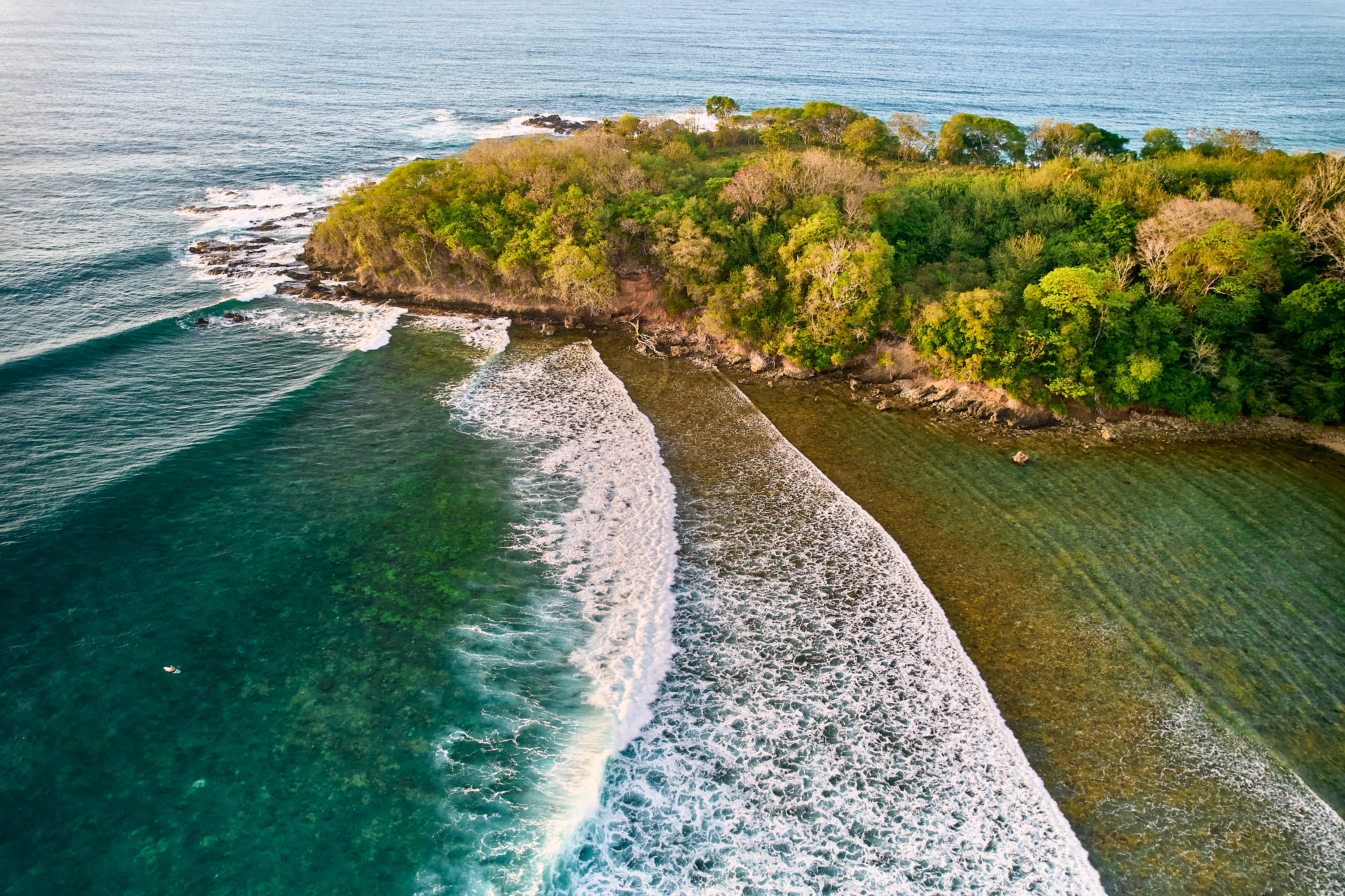
If the reef dies, say the Rocky Point Foundation, our famous wave dies. Iconic surf breaks around the world are increasingly extinguished by development

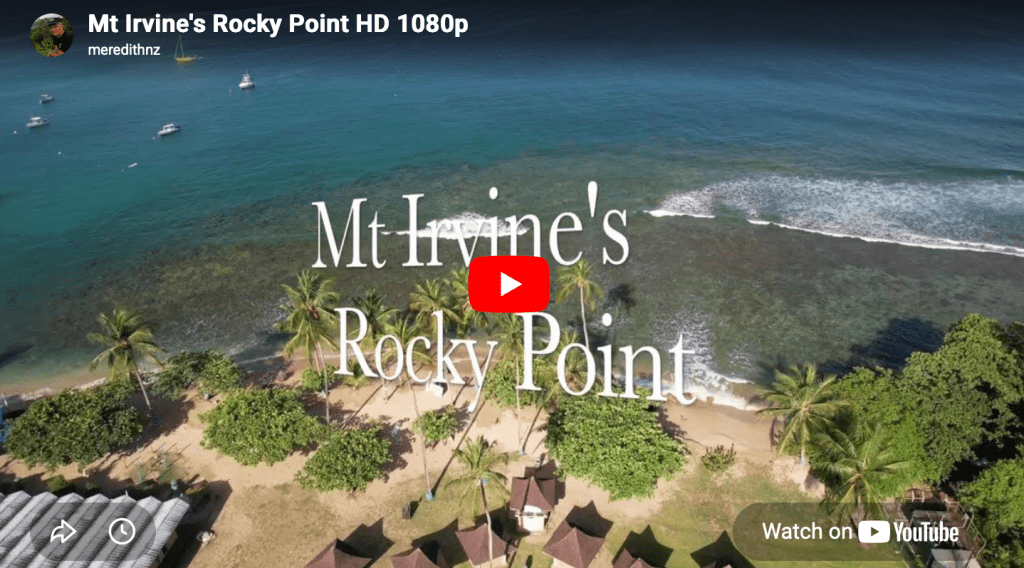
The last wilderness left in south west Tobago, bar the mangrove forest at nearby Bon Accord, is this fragile coastal headland in Mt Irvine; an ecological hotspot surrounded by coral reefs and dive sites upon which one of the world’s great surf waves – and a vibrant local culture – is formed.
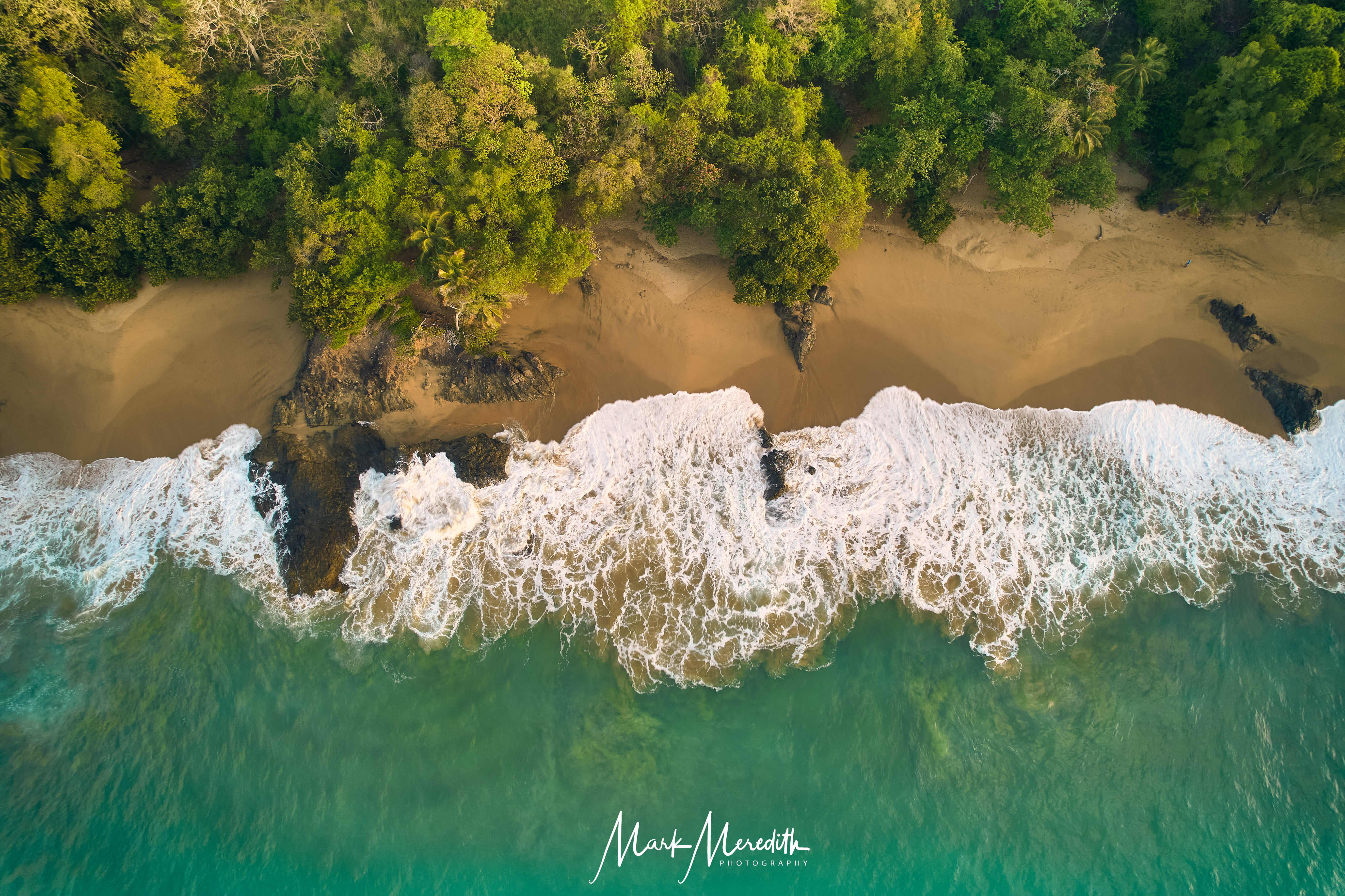
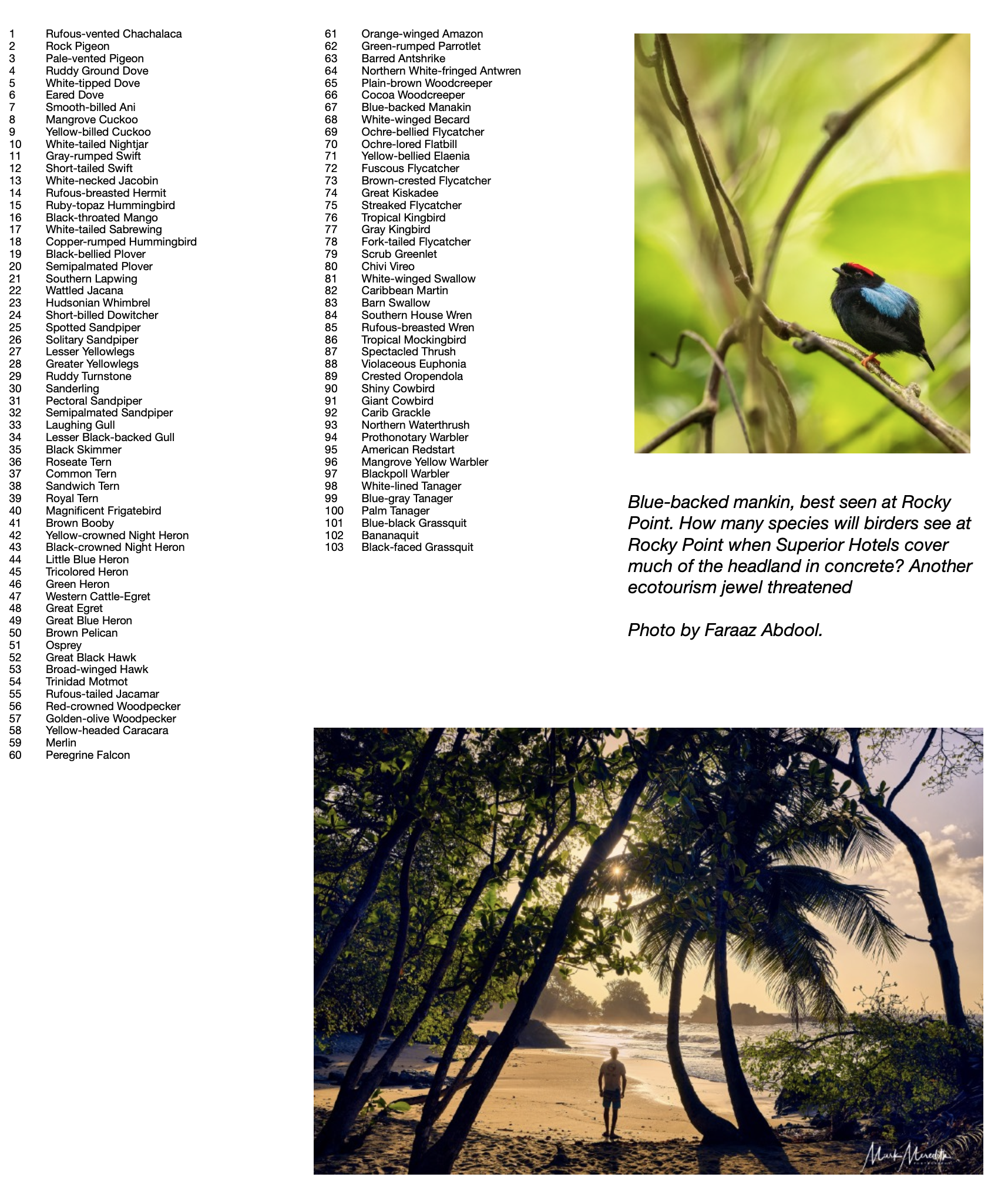
At Rocky Point, leatherback and hawksbill sea turtles haul themselves up the beach from pounding waves and lay eggs beneath the shade of towering manchineel at Back Bay, safely in the darkness of night. Above, a thick canopy of trees fringe the entire peninsula, protecting the reef below, providing shelter to some of over 100 species of birds, including threatened migratory birds, which have been recorded here.
It is this Tobago Garden of Eden that the EMA has decided can be transformed into a high density, exclusive residential concrete playground, with a lowly 3.5 star hotel tacked on to make it look as if it really is a tourism development (see Tourism Justification below).
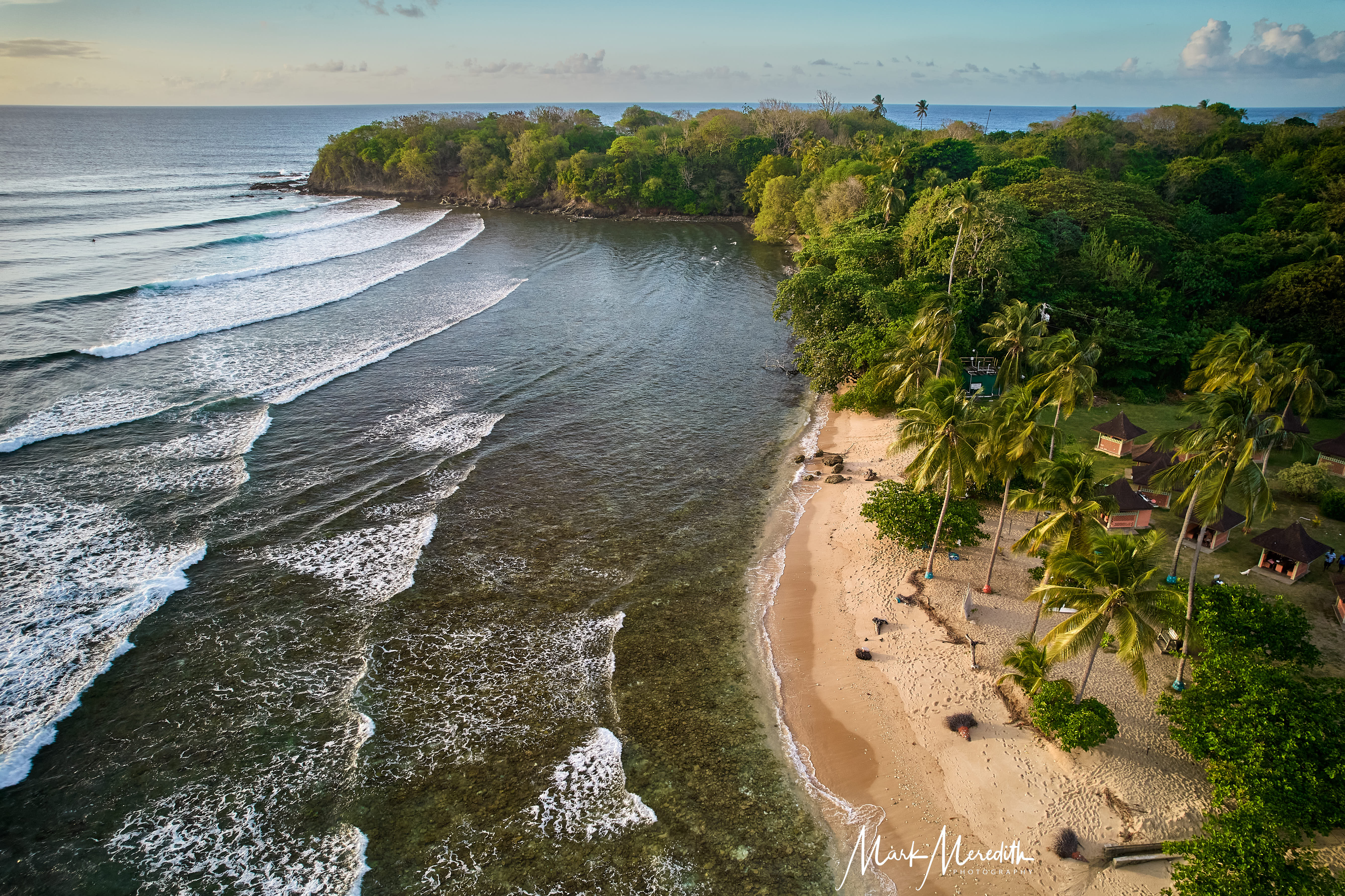
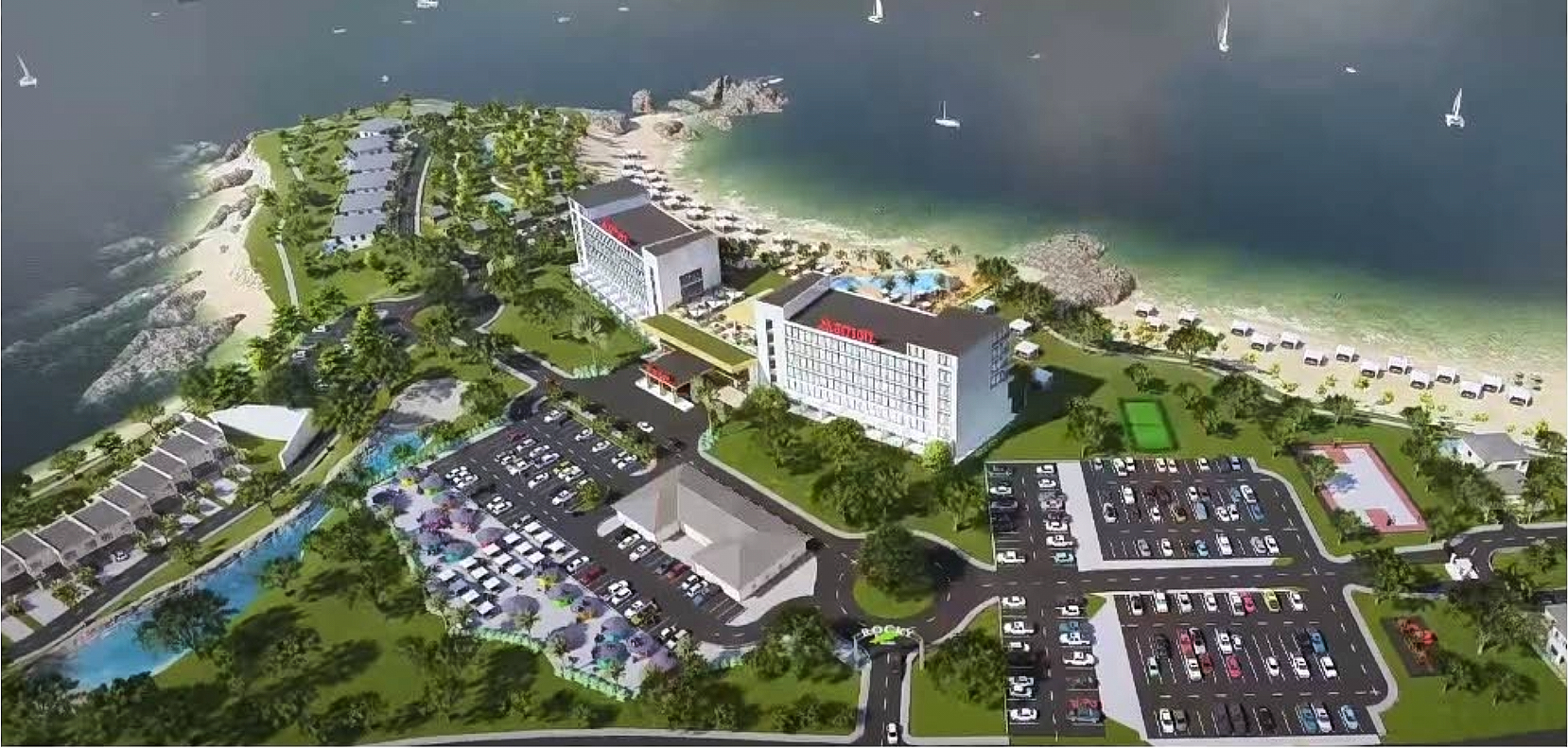
The idyllic setting and scenic values at Mt Irvine public beach and Rocky Point (above) will be lost as a result of the huge residential and hotel development (below). The EMA said: “Notably, the approved development does not include any coastal or marine works”. The developer has refused to scale back the size of the project in any way in the EIA’s Analysis of Alternatives
THE SUPERIOR HOTELS APPROVAL
The EMA’s approval was unexpected and sudden, dismaying those opposed to the urbanisation of Rocky Point by John Aboud’s Superior Hotels. And it surprised and disappointed some in the EMA’s Review Committee who had only a few weeks earlier reviewed Superior Hotels’ EIA, urging they reject the application.
It was recommended to the EMA to dismiss the application in its current state in formal reports from the IMA, and SOS Tobago, the turtle conservation NGO, who said the potential environmental “impacts were numerous, and the risk of significant impacts too high”; and because “those impacts cannot be mitigated to an acceptable level”.
The THA’s Department of the Environment, Climate Change and Energy (DECCE) also had unaddressed concerns on coastal erosion, and lack of documentation from “agencies/authorities evidencing their ability to treat wastewater from the proposed development,” and the lack of an alternative justification for the project, among others.
But that is not what the EMA told the public. In a flashy media presentation announcing the award of a CEC on April 28, the EMA claimed that Rocky Point’s environment would be protected by “robust mitigation measures embedded in the project design”.
They said: “The EMA’s review confirmed that potential environmental and social impacts have been appropriately identified and addressed through robust mitigation measures embedded in the project design.”
This is untrue. The EMA has approved the project before the necessary amendments required by the review committee have been, in the EMA’s own words to me, “comprehensively” addressed.
The litany of serious, still unaddressed deficiencies in the EIA runs to 51 pages in the IMA’s critique of Superior Hotels’ EIA, failing many of the conditions of the CEC’s Terms of Reference.
These are shown in the EMA’s Review and Assessment Report (RAR) of the EIA and subsequent Review Committee’s report which examined the amendments and responses made by Superior Hotels to their EIA failures in the RAR.
“To approve this project in its current state would be to ignore established scientific evidence and international environmental standards, leading to the foreseeable destruction of Tobago’s vital marine assets,” warned the IMA review to the EMA’s committee.
But that is what the EMA has done.
REVIEW OF THE EIA
Page after page of rejections of the developer’s EIA deficiencies detail its incorrect information, its lack of hydrodynamic modelling data, its inadequate mitigation and management measures and its sheer, inappropriately large scale, leading to one conclusion: a likely catastrophic sedimentation overload caused by the massive earthworks involved, especially during severe weather events, and the ability of the already stressed Mt Irvine reef to cope.
Jonathan Barcant, a Civil Geotechnical Engineer and international Erosion Sediment Control (ESC) Specialist told me the proposed development, in such a “dynamic location”, was a “huge risk”, and that the developer’s mitigation measures and management plan were “sorely lacking”.
SOS Tobago advised the EMA: “In our opinion, the scale of the proposed development at Rocky Pt is not compatible with the environmental value and sensitivity of the area with turtle nesting at Back Bay and the nearshore reef at Mt Irvine which is also home to juvenile green and hawksbill turtles.”
But the EMA sees things differently, obviously. According to them, Rocky Point doesn’t qualify as a coastal area.
“Notably, the approved development does not include any coastal or marine works,” their media release trumpeted.
Which would ignore the residential buildings looming along the cliff edges in the EIA master plan – these originally had inadequate setbacks of 3.5 metres, but international best practice in sensitive areas is 30-plus metres. The EMA has since stipulated 30m above the high water mark after review committee criticism.
Such coastal works require CEC designated activity order No 13c: “The dredging or cutting of coastal marine areas”. But, inexplicably, this CEC activity was not included in the schedule by the EMA.
In any EIA application, a valid Analysis of Alternatives to the current application must be produced, including the No Action Alternative. But Superior Hotels fails this requirement also, and they dismiss “no action”.
Superior’s No1 preferred alternative is “housing only”, or (existing) “master plan with marina”.
There is no mention of a “hotel only” alternative, even though the developer’s stated rationale is to expand hotel accommodation.
The THA’s DECCE, questioning this rationale, asked: “Could the applicant indicate why the proposed alternative of hotel/resort only (excluding residences) was not considered?”
No mention either of an obvious, more suitable alternative, an “eco-lodge” or heritage/nature park, although plans for those have been drawn up by the Rocky Point Foundation.
There is no attempt to scale back the development footprint in any way.
THE TOURISM JUSTIFICATION
In the EIA justification for the project, the developer claims it “complements Tobago’s ecotourism offerings by providing high-quality accommodations for visitors to natural attractions like Buccoo Reef and the Main Ridge Forest Reserve.”
In other words, Superior Hotels are “complementing” Tobago’s unique ecotourism attractions by removing them at Rocky Point.
The hotel is only there at all because the lease given to Superior Hotels by eTeck stipulated a 200-room hotel be built, and the developer has kept to exactly that bare minimum, wrongly using it to justify the development in their EIA, according to review criticism of that document.
The Marriott-branded hotel, explained as the reason for the entire enterprise, occupies just one-eighth of the overall development footprint.
Three-fifths of Rocky Point’s entire headland will be consumed by 55 dispersed real estate units and their supporting road network, most on cliff edges or downward facing slopes above the coral reef – private villas, condos, and townhouses for what opponents have called a gated community for the “one percenters”.
The developers know very well that in the near term tourism in Tobago will likely continue its spiralling downward trajectory or flatline (despite the EMA’s unfounded, inaccurate claim of “increased arrivals”), and the only way a 3.5 star hotel in Rocky Point can be built and operated profitably is to develop the land around it for prime coastal real estate. And why not when you’ve leased 31.8 acres for the equivalent of a paltry $27 per sq.ft, or less, from state agency eTeck?
Aboud said, “Tobagonians stand to benefit considerably as “this project is a game changer.” It is for his Superior Hotels, but for Tobago a game changer for all the wrong reasons.
Citizens opposed to the development may understandably see the approval as a betrayal by the EMA of its core values (the “Precautionary Principle” and “wise use”) and a dereliction of duty towards present and future generations of Tobagonians who will lose a priceless jewel of their natural inheritance.
Why did the EMA approve such a development in such an important ecological area, destroying Rocky Point’s outstanding scenic values in direct contravention of Tobago’s official tourism policy of promoting the island’s unique brand of unspoiled beauty, its ecotourism paradise?
The short answer is the EMA’s “core values” were sacrificed on the altar of “fast-tracking”.
The EMA, with a new board and CEO, has been undertaking a fresh “efficiency” regimen of “streamlined’ approvals processes, as demanded by its line minister Kennedy Swaratsingh, CEC’s scattered about like confetti.
In a March radio interview discussing CEC fast-tracking, Swaratsingh told listeners that Superior Hotels could expect a CEC in Tobago “later this month”.
I emailed the minister asking how he could know this, as the approvals process was still ongoing. He did not respond.
I asked the EMA how the minister could know this.
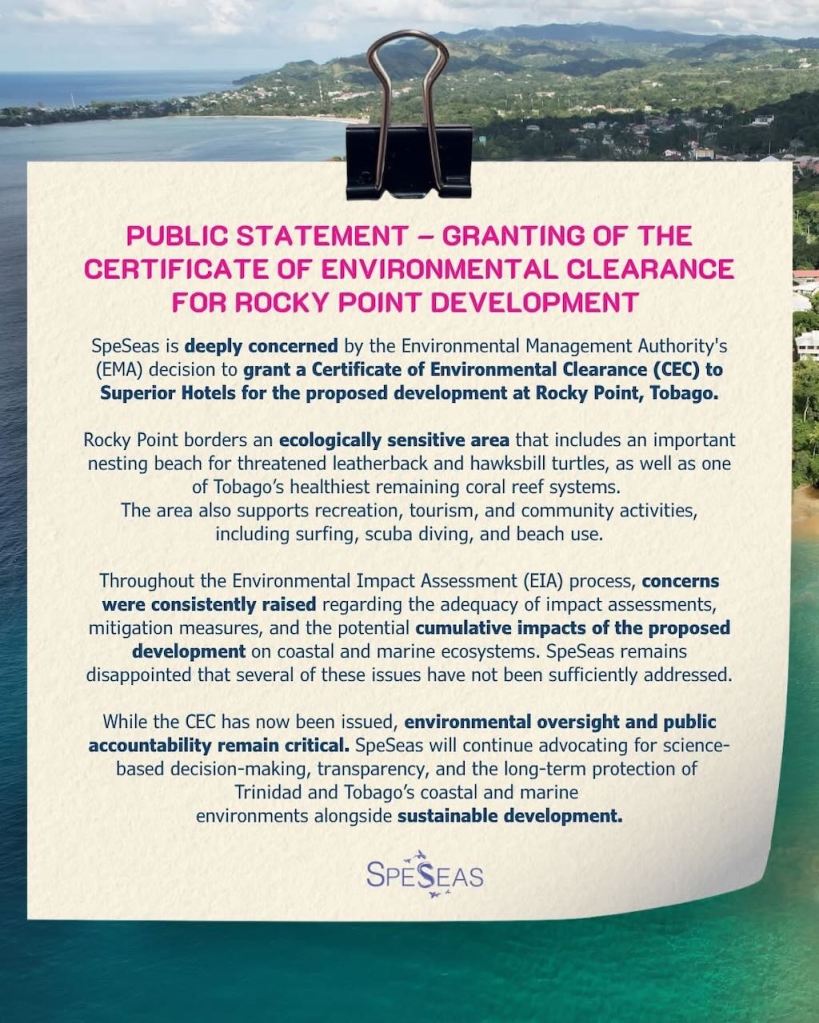
Acknowledging the “seriousness of the concerns you have raised”, the EMA replied, the “issuance of a CEC can only occur once the EMA is satisfied that the proposed activity can proceed without unacceptable environmental risk”.
Major deficiencies of Rocky Point EIA still not addressed by Superior Hotels
No data, such as tourism demand or stakeholder input, is provided to justify the need for the project – it only refers to the requirements in the Deed Of Lease
No credible Analysis of alternatives; a refusal to evaluate scaled-down footprint
Ignored requests for hydrodynamic modelling – for sediment plumes
Unaddressed impact of stormwater discharge and surface runoff onto reef
No detailed information on earthworks, the nature and extent of clearing, cutting, filling and grading
Inadequate mitigation and ecological risk of large volumes of freshwater and sediment discharged directly onto nearshore corals
No consideration of how multiple stressors interact, ignoring well-known cumulative impacts on an already stressed reef – this omission leads to a significant underestimation of the risk of irreversible reef degradation
Inadequate setbacks that do not consider the nutrient loads into marine sensitive areas placing corals reef and turtle nesting beach at ecological risk
No conceptual designs or drawings; no building heights, floor plans, construction materials and development footprint
No evidence WASA can meet the demand for water and accommodate and adequately treat the sewage produced by the development
No design specs, despite requests, to demonstrate that retention ponds and drainage can handle increased peak flow post-development
Non-compliance with international best practice and direct requests from the EMA for additional details, data and studies
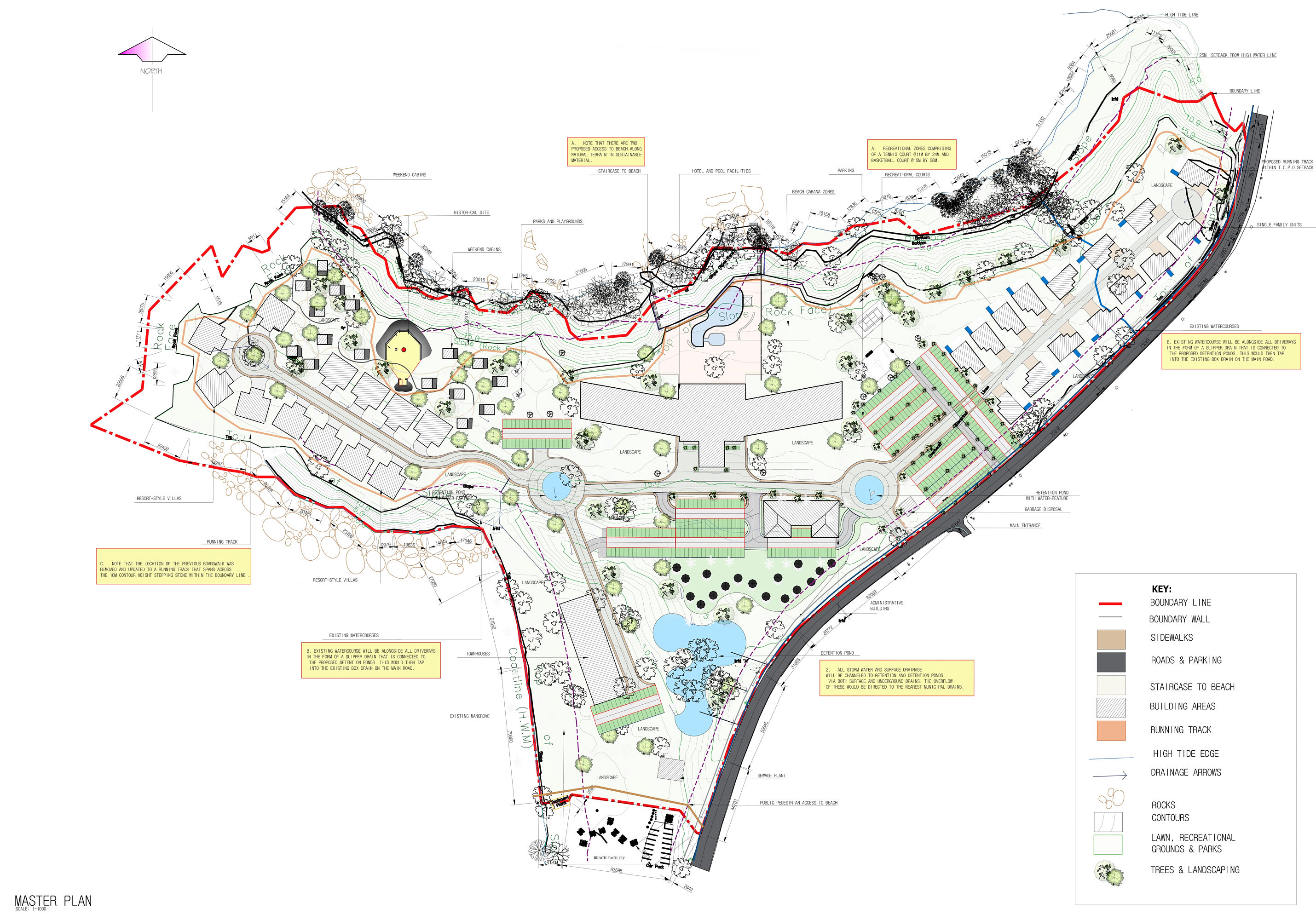
The Marriott-branded hotel, in the centre above, explained as the rationale for the entire enterprise, occupies just one-eighth of the overall development footprint. The master plan from the CEC show three-fifths of Rocky Point’s entire headland will be consumed by 55 dispersed real estate units and their supporting road network, most on cliff edges or downward facing slopes above the coral reef – private villas, condos, and townhouses. There are no conceptual designs or drawings; no building heights, floor plans, construction materials or development footprint to determine the impact on Rocky Point’s outstanding scenic values or on the local communities of Mt Irvine, Black Rock and Pleasant Prospect

The coastal woodland at Rocky Point where “resort style villas” and townhouses are planned according to the CEC application to the EMA
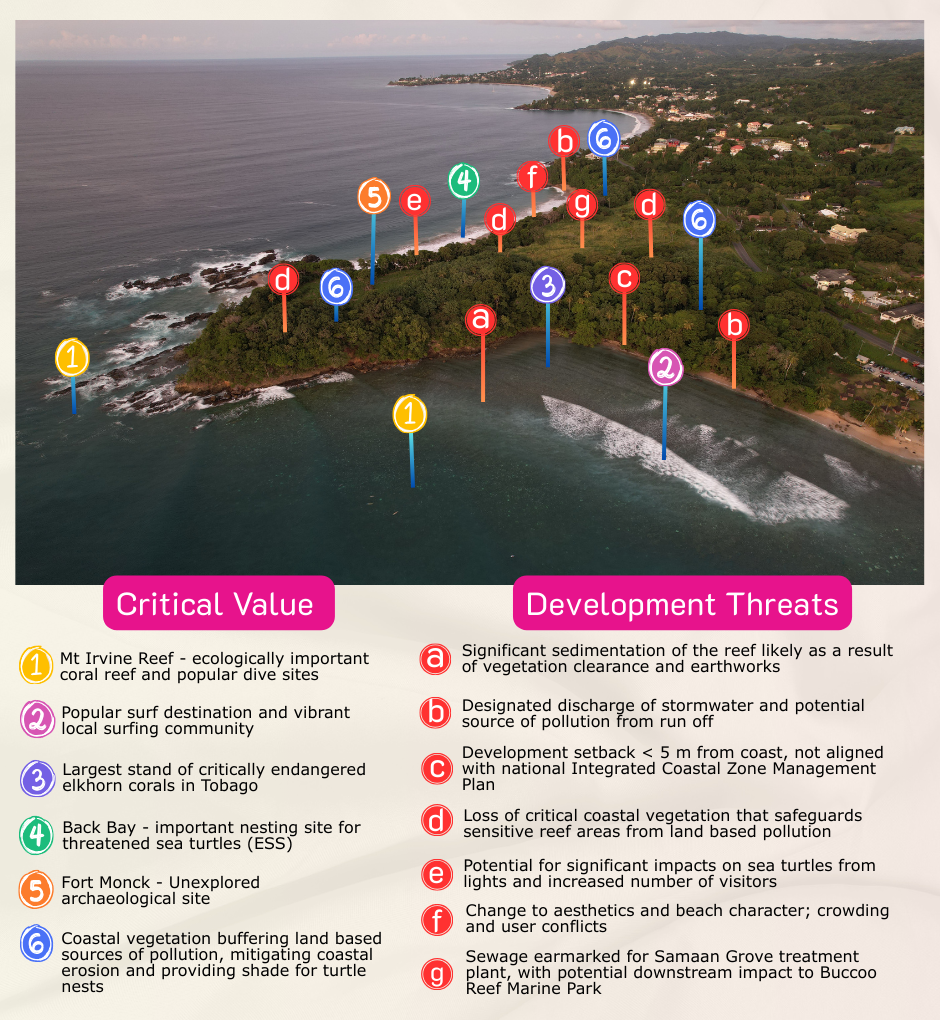
NGO Speseas graphic showing the ecological value of Rocky Point and threats from the development
Rocky Point Birding List
MEDIA RELEASE FROM NGO SPESEAS
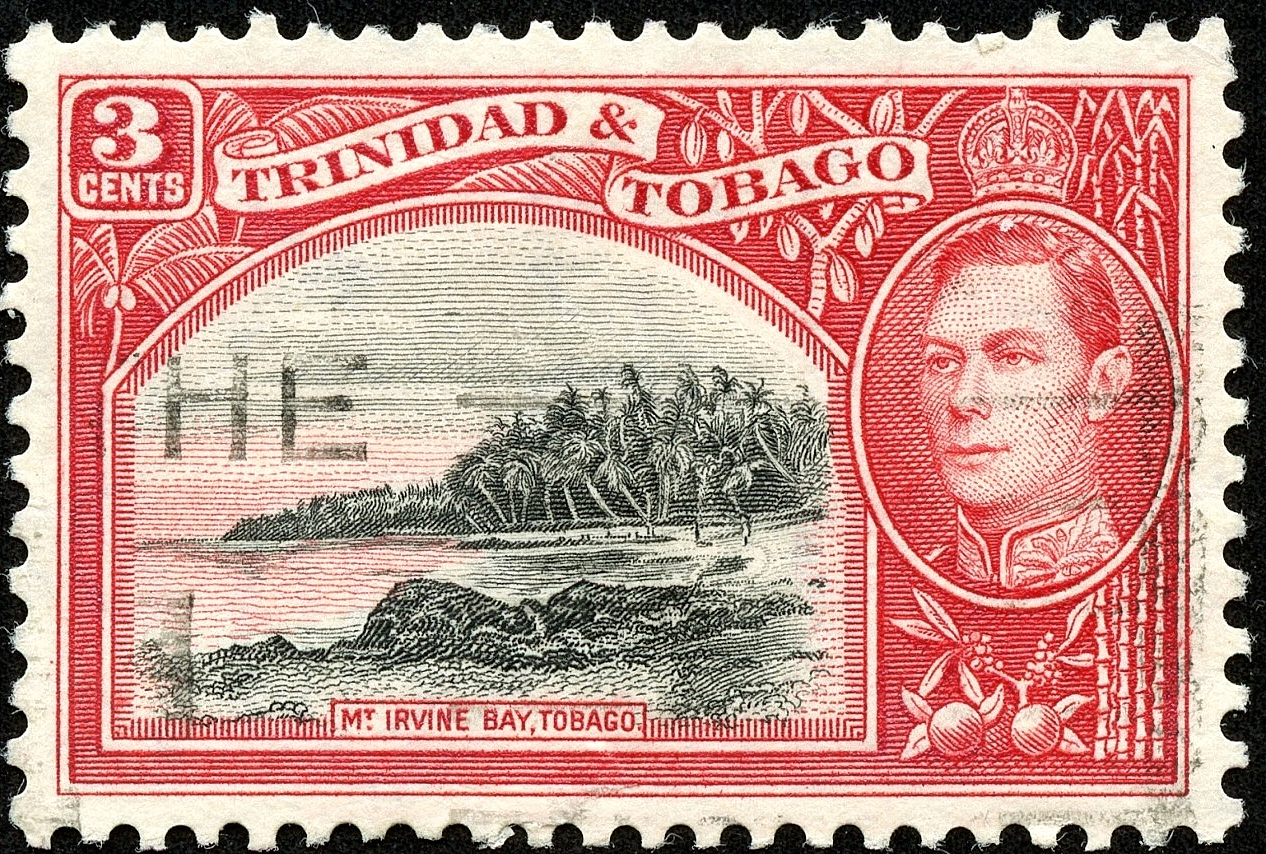
Postage stamp, circa 1938, celebrating the “stunning tropical landscape”
of Mt Irvine
Read more about Mt Irvine and Rocky Point here: https://scribblesnz.com/2024/06/14/something-is-wrong/


I am so grateful for this article. I would like to use it in my son’s confirmation class next week so that the kids become aware and can discuss how we care for the earth.
While it is in the public domain, I still am seeking your permission to do so. The intention is to have them do a moot court arguing for an against the “development”.
Also, is anyone/Body taking any measures to stop this “development” from going ahead?
LikeLike