
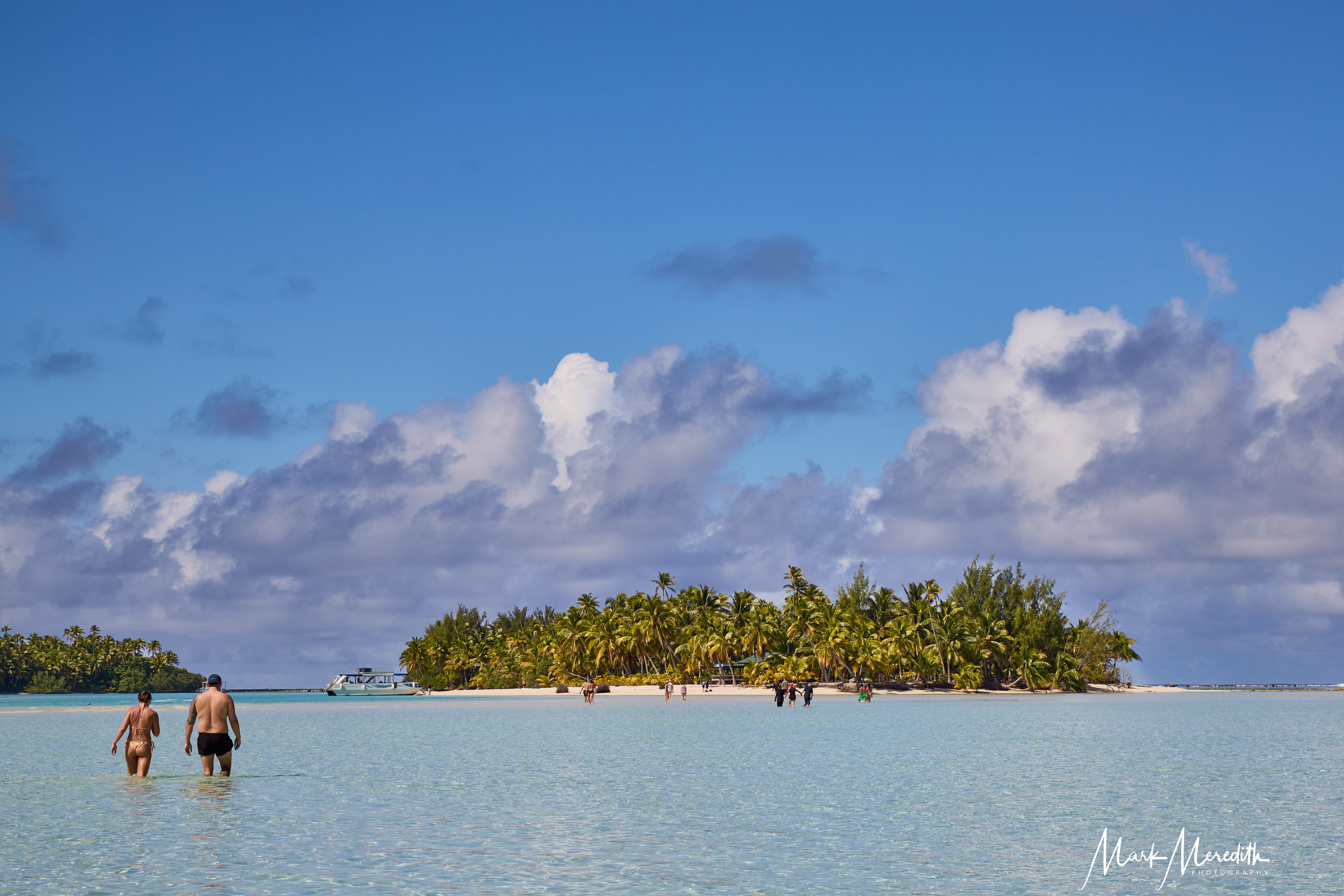
A story about tourism from the Pacific, with a Tobago context
In Tobago, two large, environmentally intrusive hotel and real estate developments on virgin coastline have reached separate milestones in their quest for approval by Trinidad and Tobago’s Environmental Authority (EMA).)
At Kilgwyn, situated at the take-off end of Crown Point international airport’s runway in a mangrove swamp, the EMA has, surprisingly, given its blessing to a 500 room “5 Star Grand Luxury” resort, approving a Certificate of Environmental Clearance (CEC) in an ecologically important coastal area. Meanwhile at Mt Irvine’s Rocky Point, the developers of the 200 room Marriott-branded hotel and multi-faceted real estate project have completed their Environmental Impact Assessment (EIA)

© Mark Meredith 2026
In total, 700 new hotel rooms and 55 real estate units (condos, townhouses, villas) will be added to Tobago’s long list of chronically under-occupied hotels. As an economic strategy for an island whose visitor numbers have dropped around 70 per cent since 2005, it makes very little sense. (see Which Way, Tobago?) You don’t have to build big to attract tourists to Tobago, destroying the environment and Tobago’s special character at the same time. The opposite is true .
In July I visited islands on the other side of the world from Tobago, which also need tourism and depend on a larger partner for critical funding. But while Tobago can barely muster 25,000 annual visitors, the Cook Islands just recorded 170,000, the majority on an island one fifth Tobago’s size. And they haven’t needed the type of developments Tobago is planning. How have they achieved that? By embracing tourism with verve and an infectious passion for their product and the environment which sustains it. Tobago would be well advised to learn from islands with far less resources, where small means more. This was my experience.
“Akaperepere ia to tatou parataito, kia vai ruperupe te reira”
– If you look after our little paradise, she will look after you
(Cook Islands Tourism Corporation)
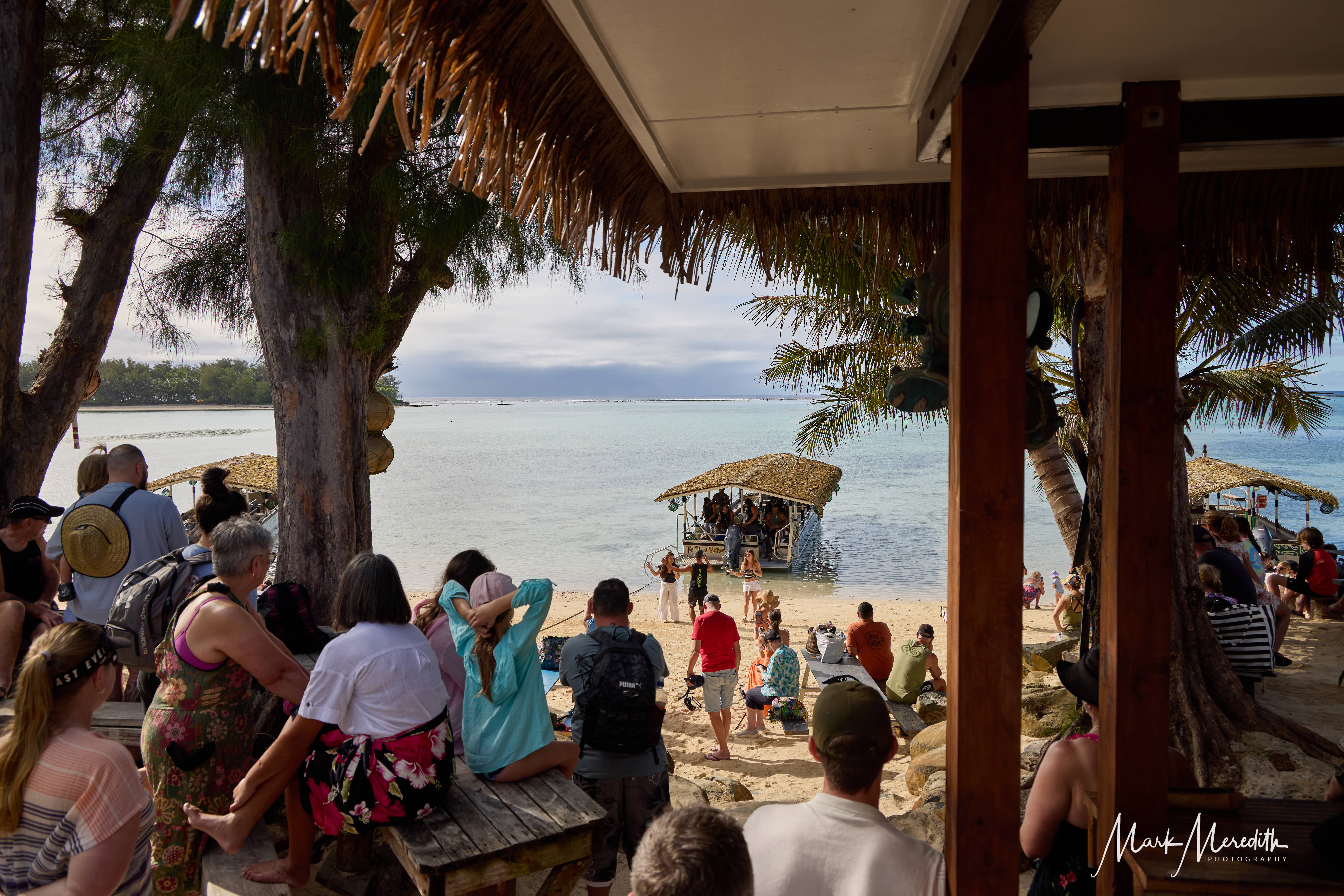

The drumming on Muri beach starts most mornings around 9.30am, the Polynesian rhythms carrying across the turquoise lagoon up to tourists on nearby balconies and decks of resort cabanas and holiday rentals peeking out among the coconut trees.
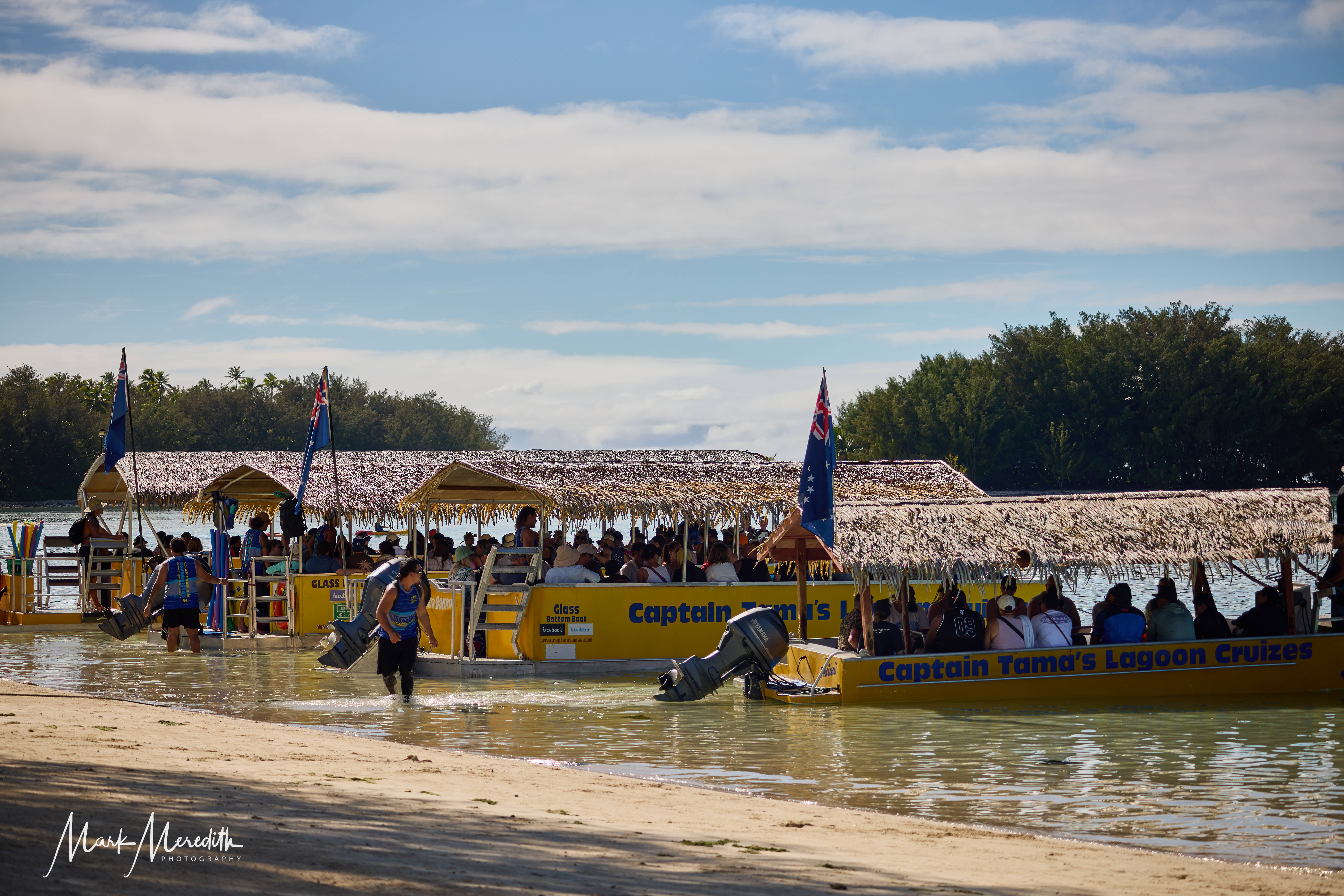
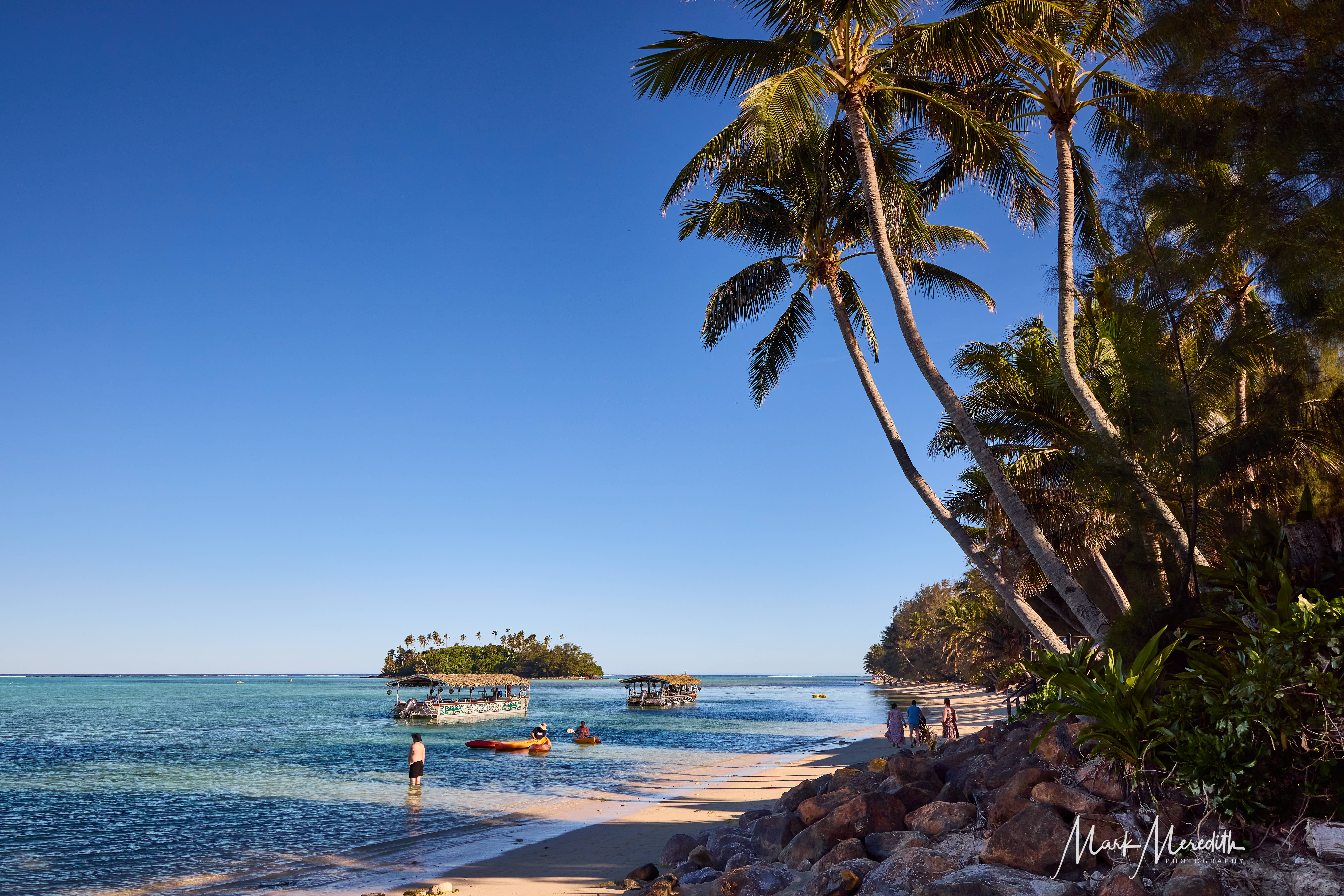
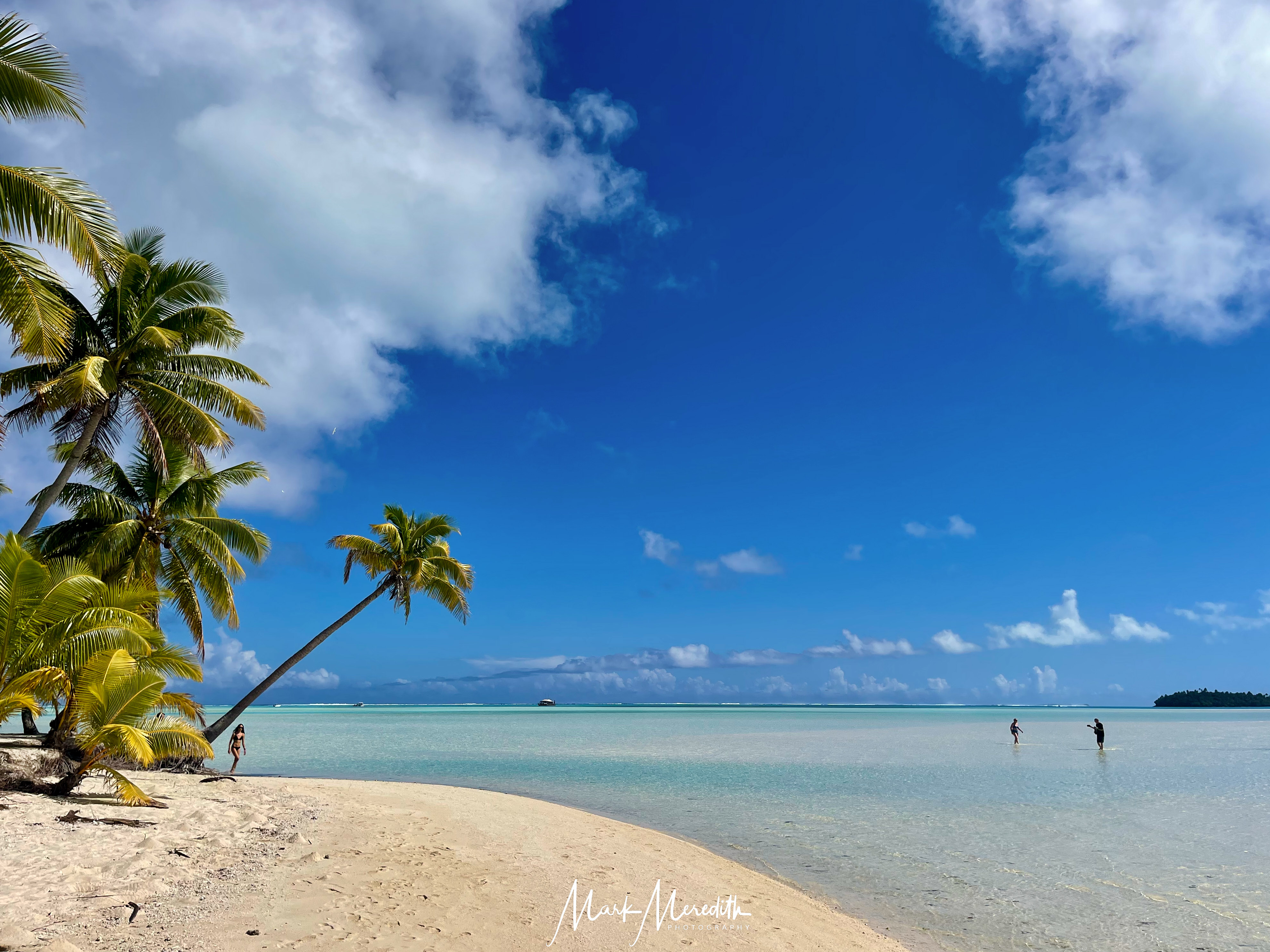
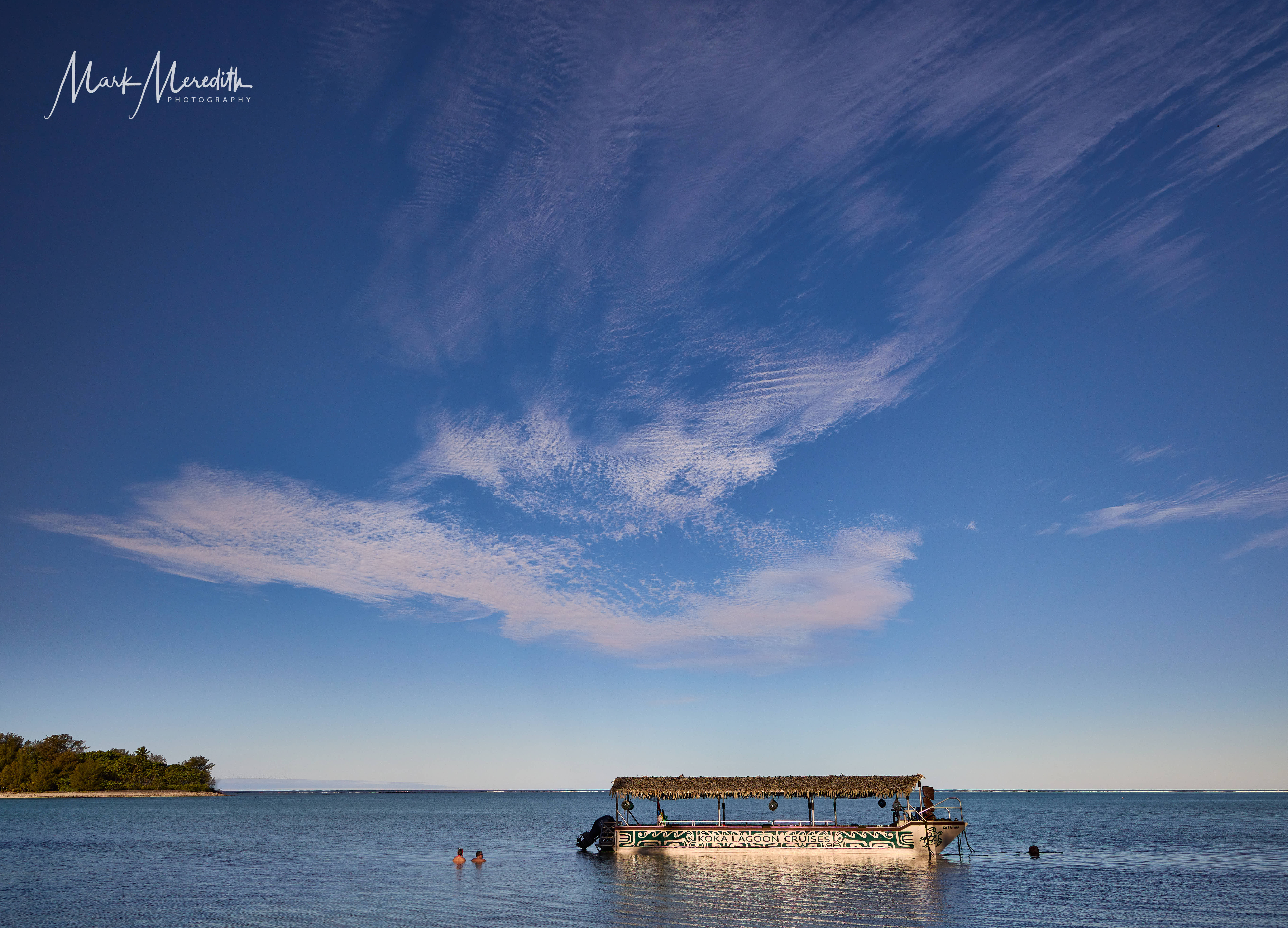
Drawn by the sound, I walk a few steps from our thatched cabana onto Muri’s golden sands along Rarotonga’s most popular stretch of coastline to the source of the music: one of three glass bottomed boats with Polynesian motifs and thatched roofs drawn up in the shallows.
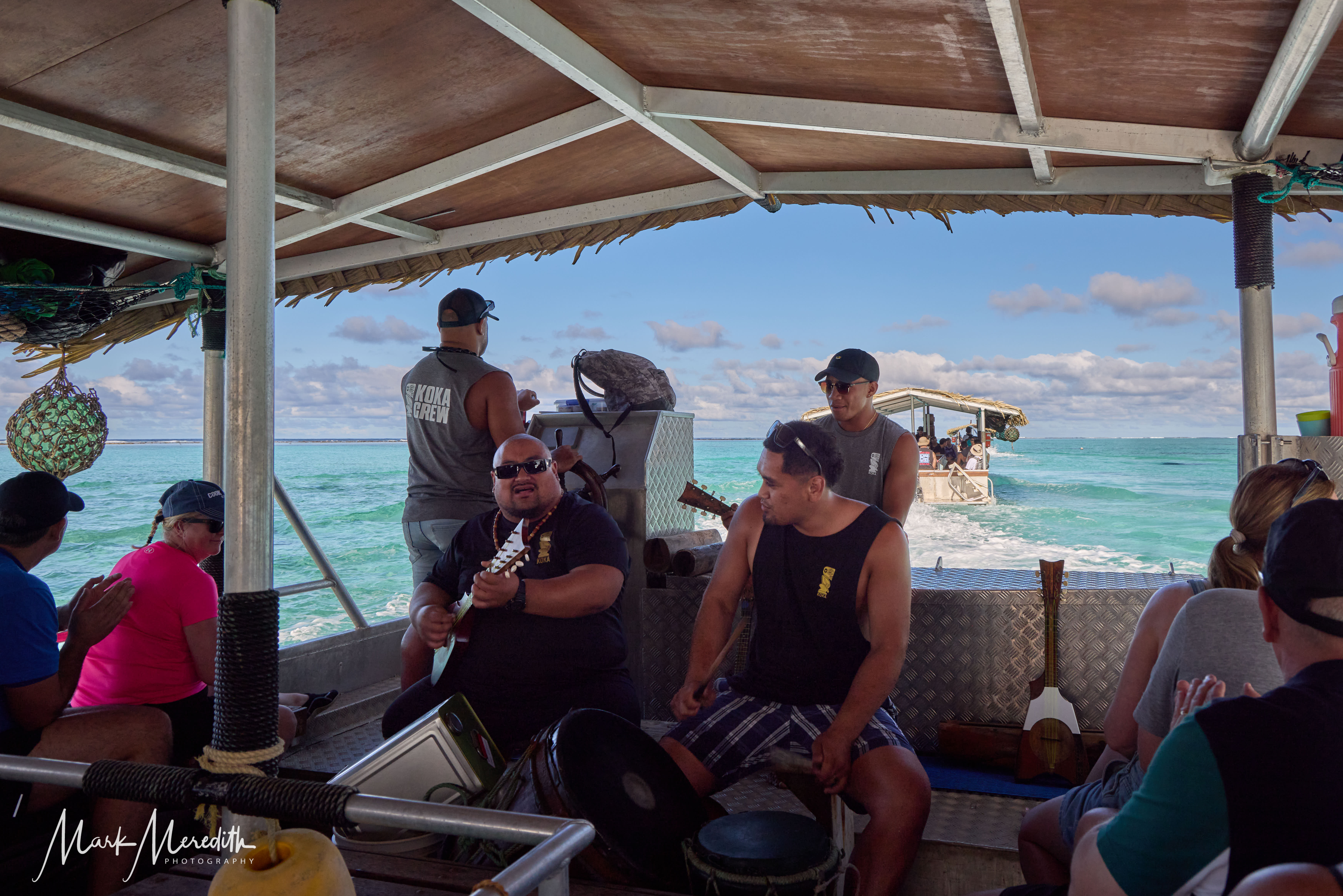
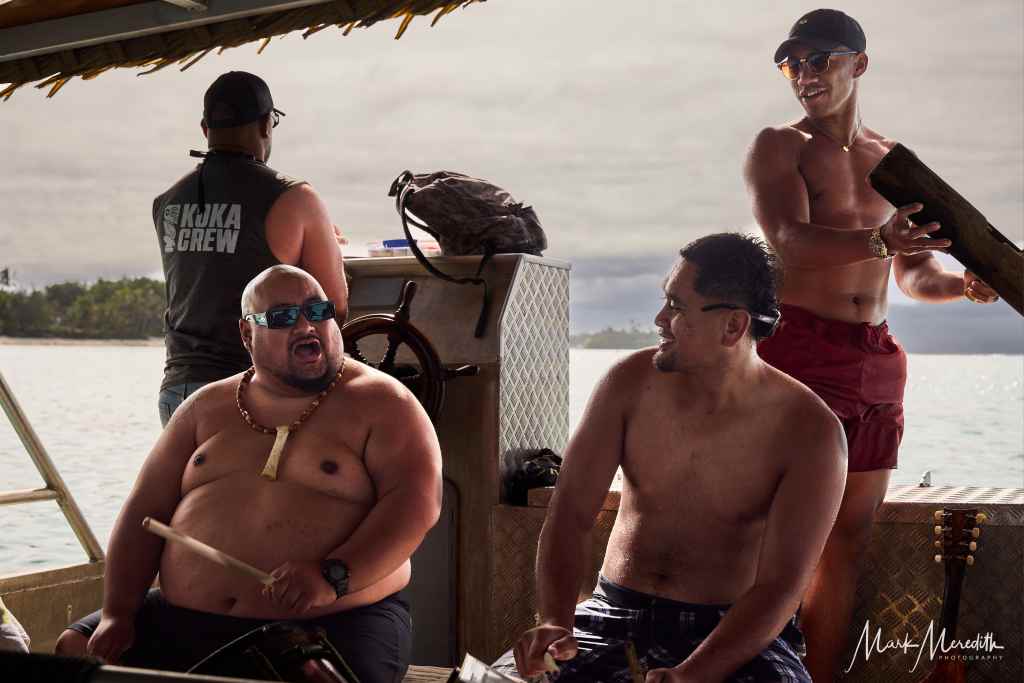
The Koka Lagoon Cruise crew in the shade of the boat have added ukuleles and vocals to the mix for the enjoyment of the growing crowd of tourists waiting to board. The boats carry 35-50 passengers and I’m told they’re full today, like most days, but they manage to squeeze us in.
We’ve drawn the lucky boat, with Captain Awesome at the helm, and the large bald jokey man and lead vocalist, “Call me Boomba!”, who will be leading entertainment for the four-hour tour.
But first there is a prayer to Almighty God: blessings and thanks for the beautiful day he’s bestowed upon us in this life-affirming location. “Say, Amen!”
“Amen!”, comes the cry from three fully-laden cruise boats.
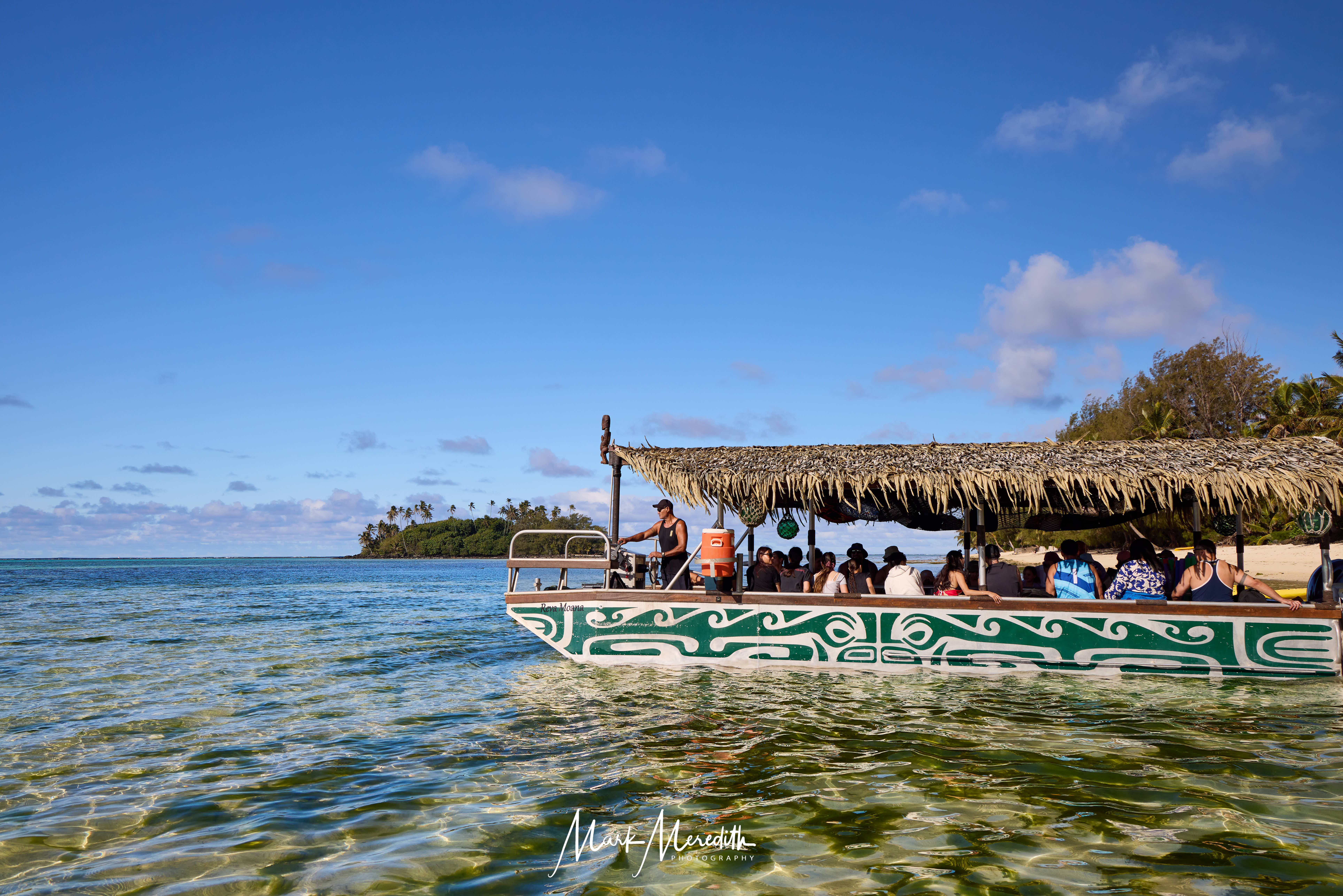
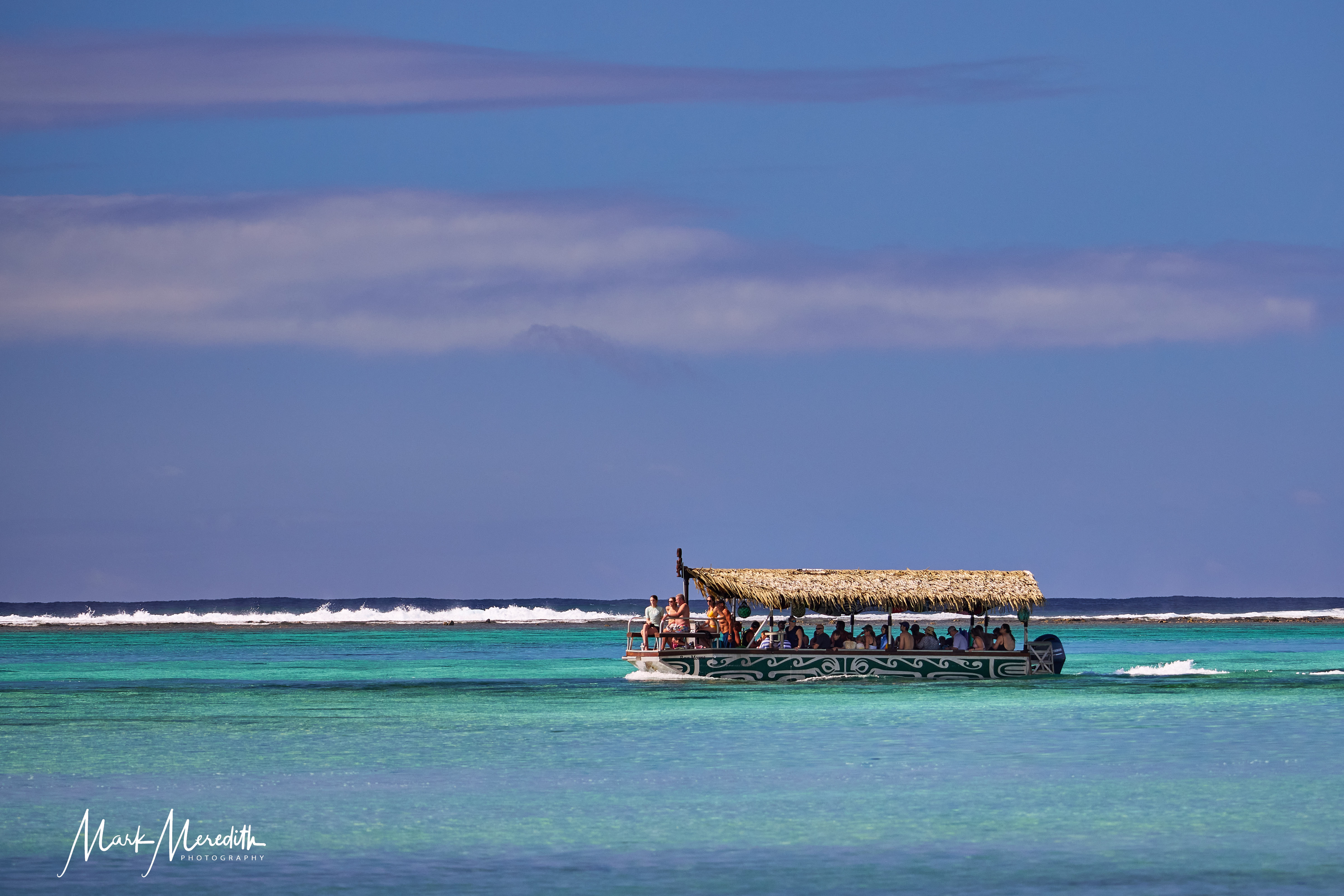
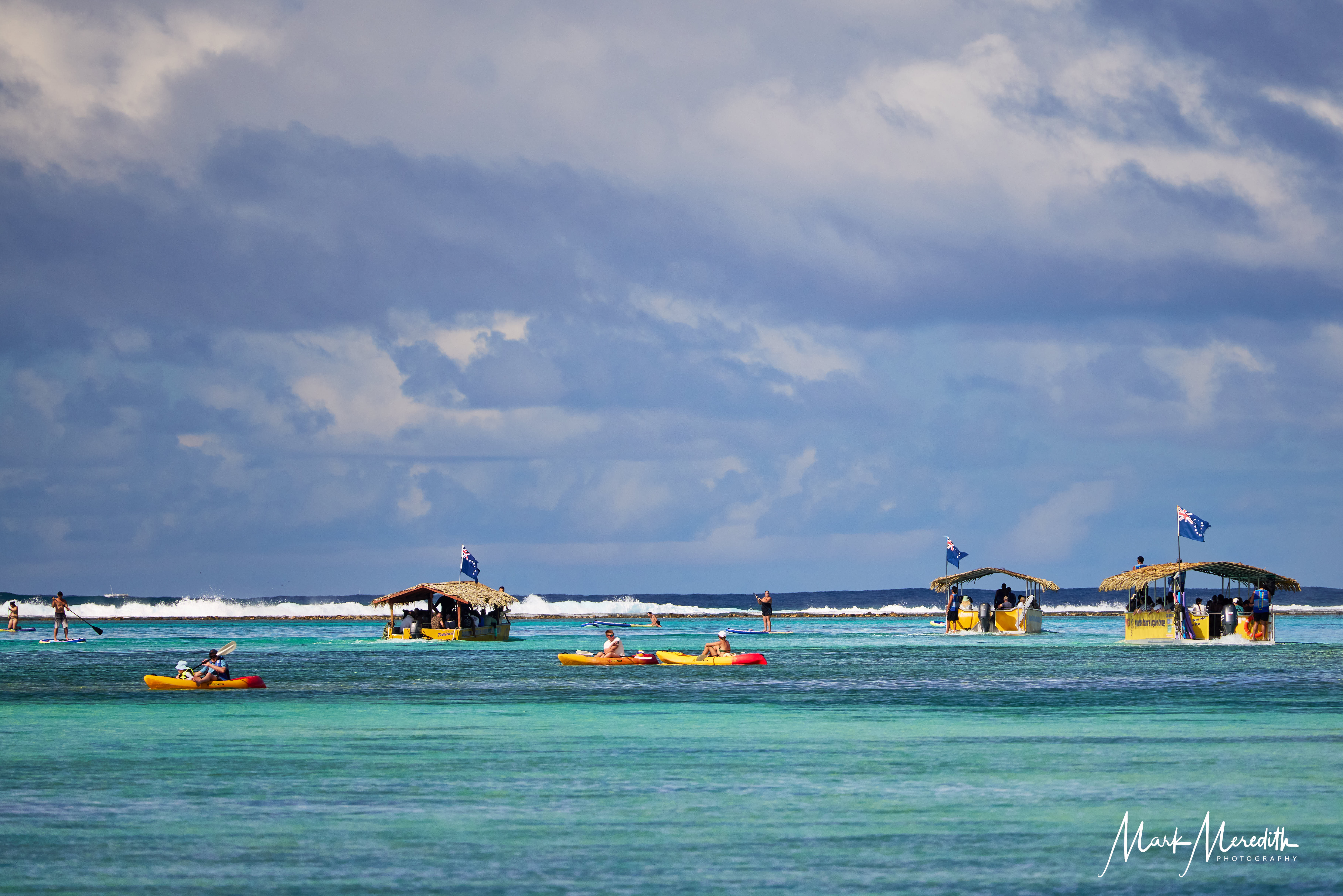
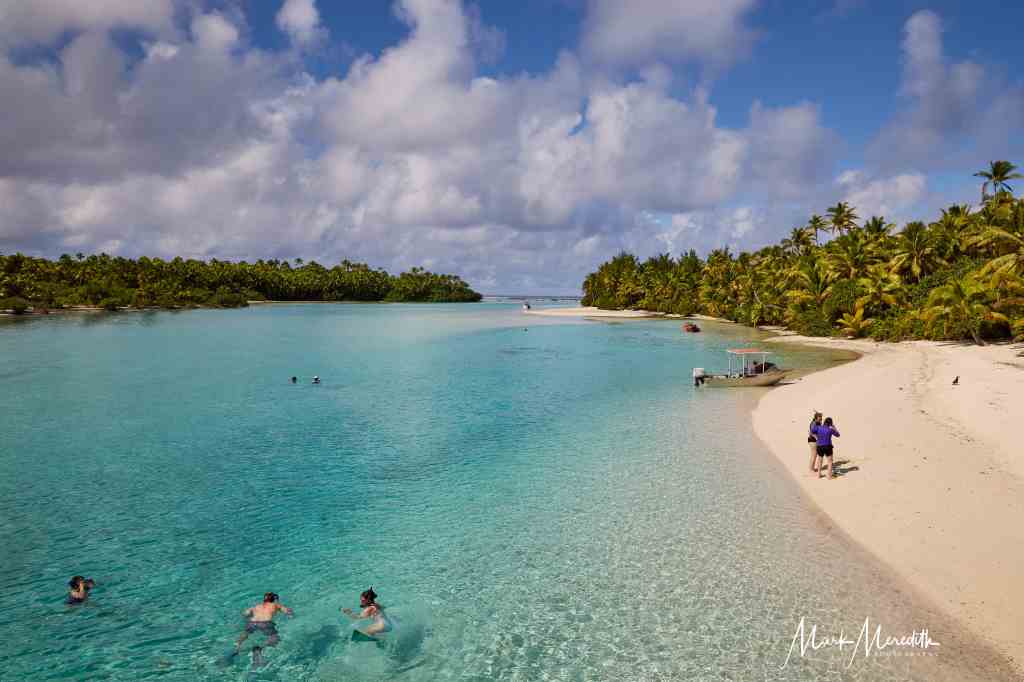
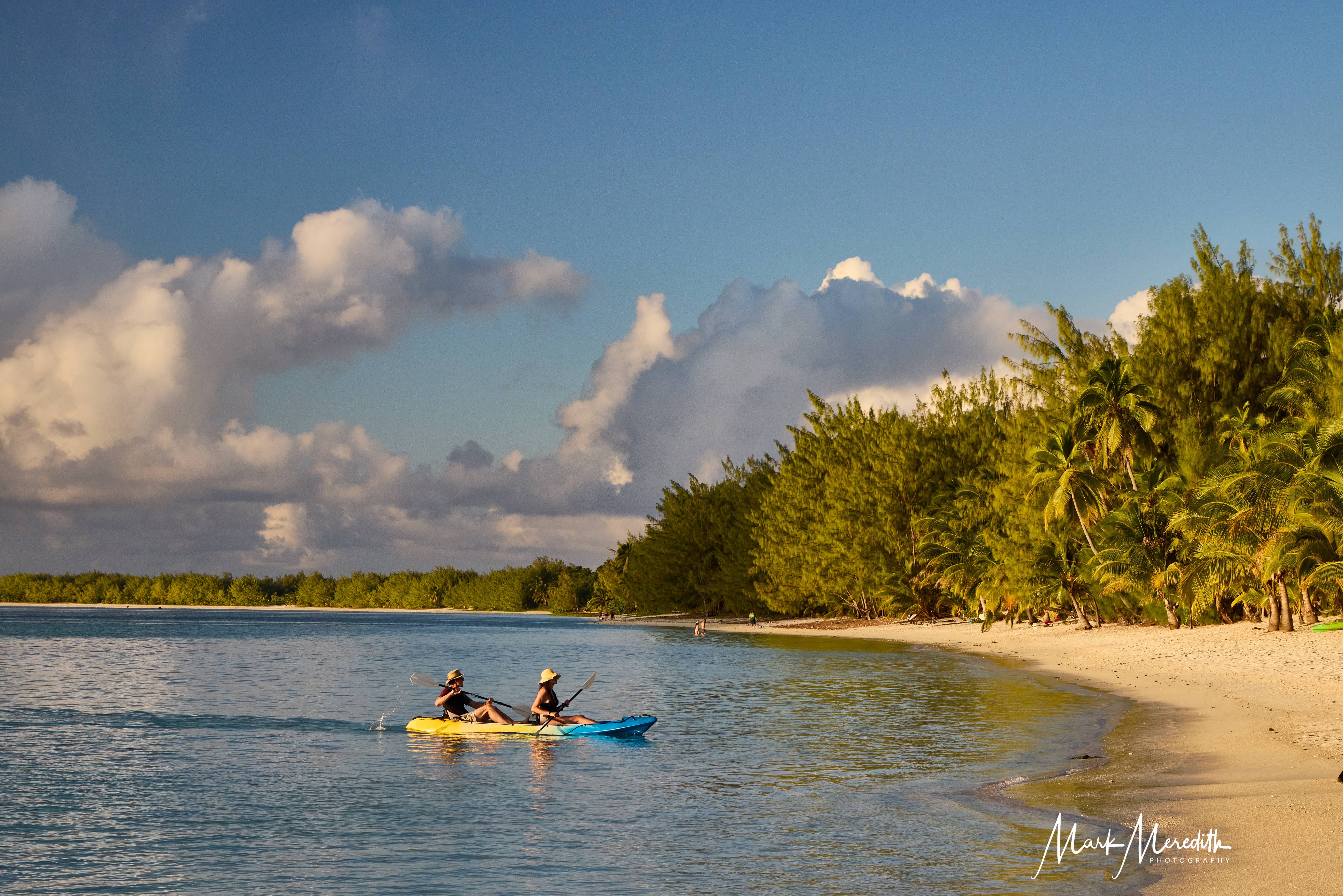
Captain Awesome eases the vessel into the luminous lagoon past kayakers, paddleboarders and snorkellers, keeping the boat close to the others so everyone can enjoy the music. We are promised culture, Polynesian insights, snorkelling, and a BBQ with coconut show on one of the motus, or islets, which characterise Muri’s beautiful lagoon.
Behind us on Muri’s shoreline, drumming noises start as Captain Tama’s Lagoon Cruises, the competition, start the pre-show before loading their tourists into three boats. These will run the same route about an hour behind us.
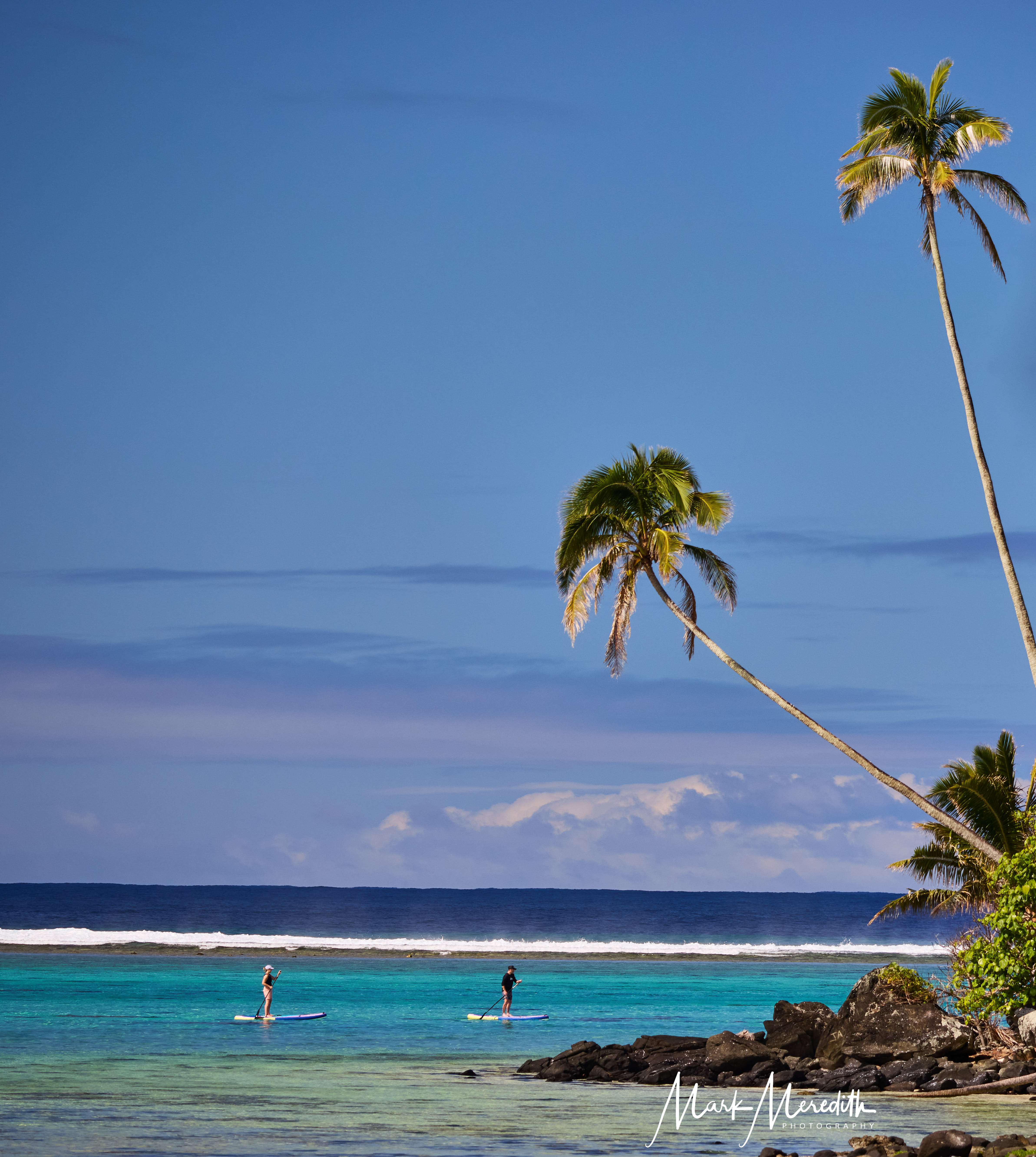
To the south, boats are being filled with visitors who will be snorkelling or using sea scooters to get close to green and hawksbill turtles that frequent some of the passages running through the reef to the ocean. It is the number one tourist attraction on Rarotonga.
There are nine operators offering such tours, seven of which have signed MOUs with Cook Islands Tourism to regulate responsible behaviour and visitor safety in the passages, which have strong currents. The turtles and locals get a rest on weekends when no such tours are allowed to run.
Tourists not on boats or beaches are getting their nature and adrenalin fixes in the mountainous interior on 4-wheel drive safari tours, quad bike and buggy tours, mountain biking, or hiking along rainforest nature trails.
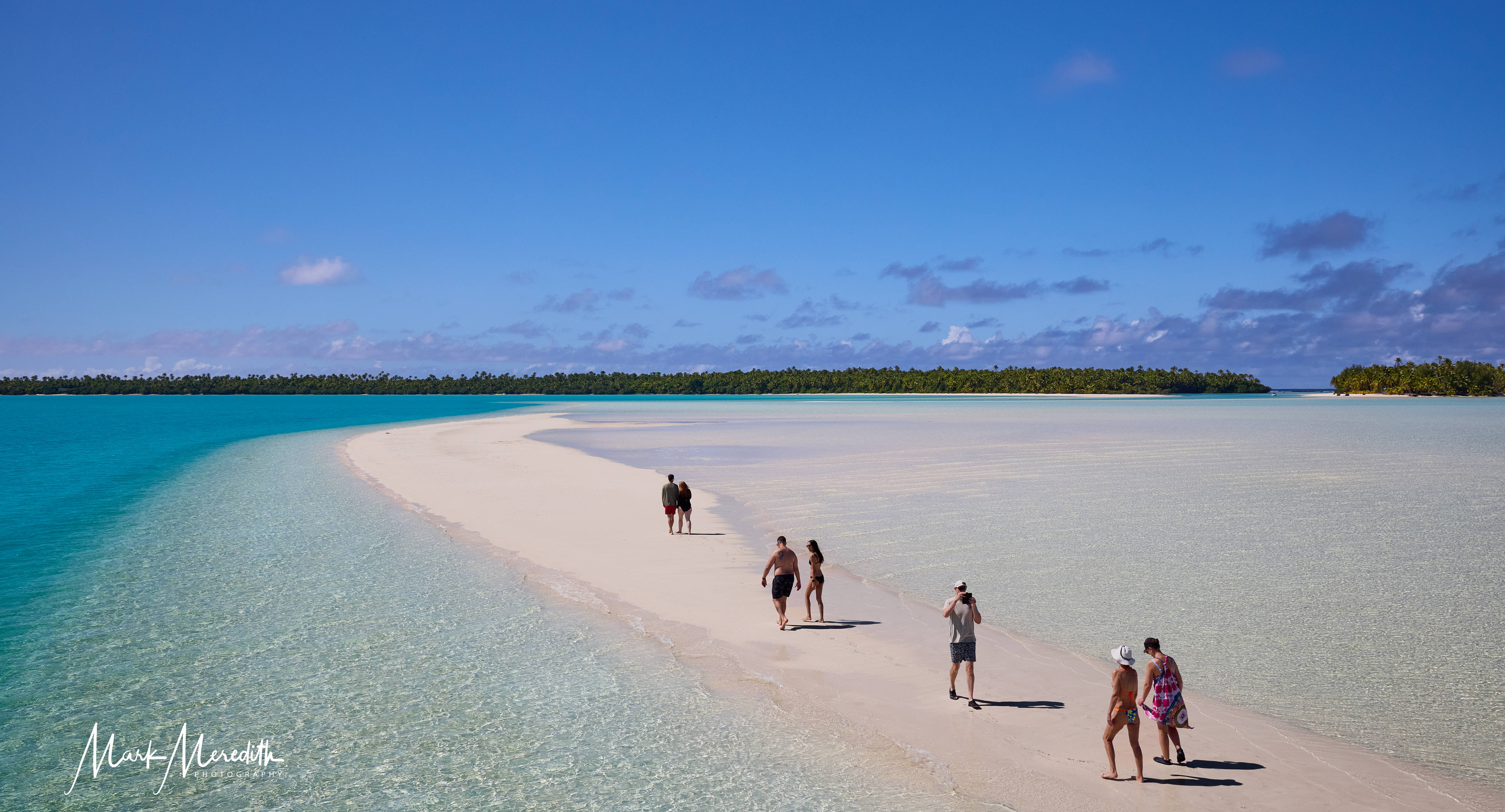
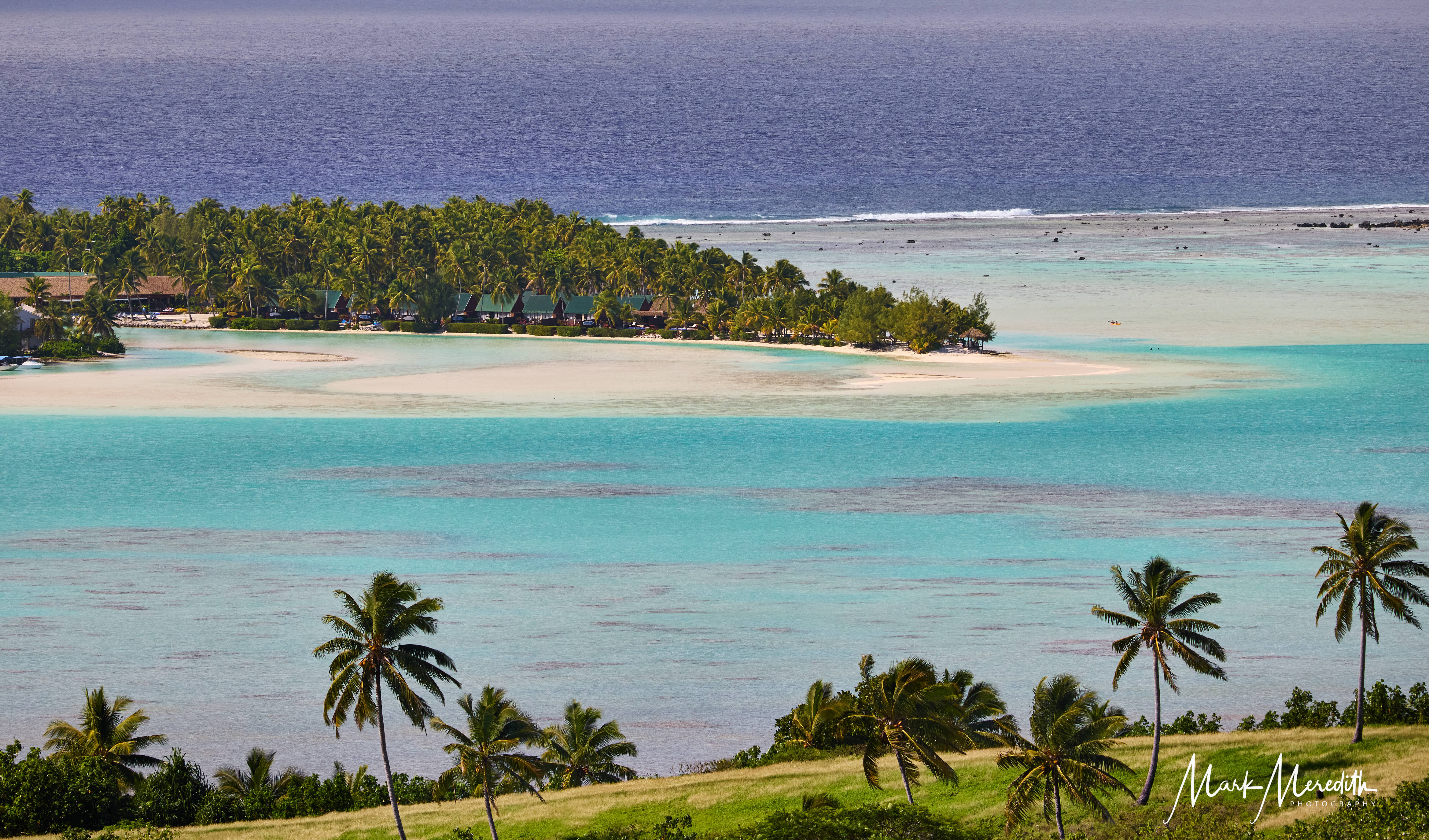
Rarotonga’s lagoon encircles the entire 67 km² round island, and from its clear blue water the largest island in the Cooks is an impressive sight, the majority of which is covered in eroded volcanic peaks enveloped in rainforest and bush. It looks as advertised, a Pacific island paradise.
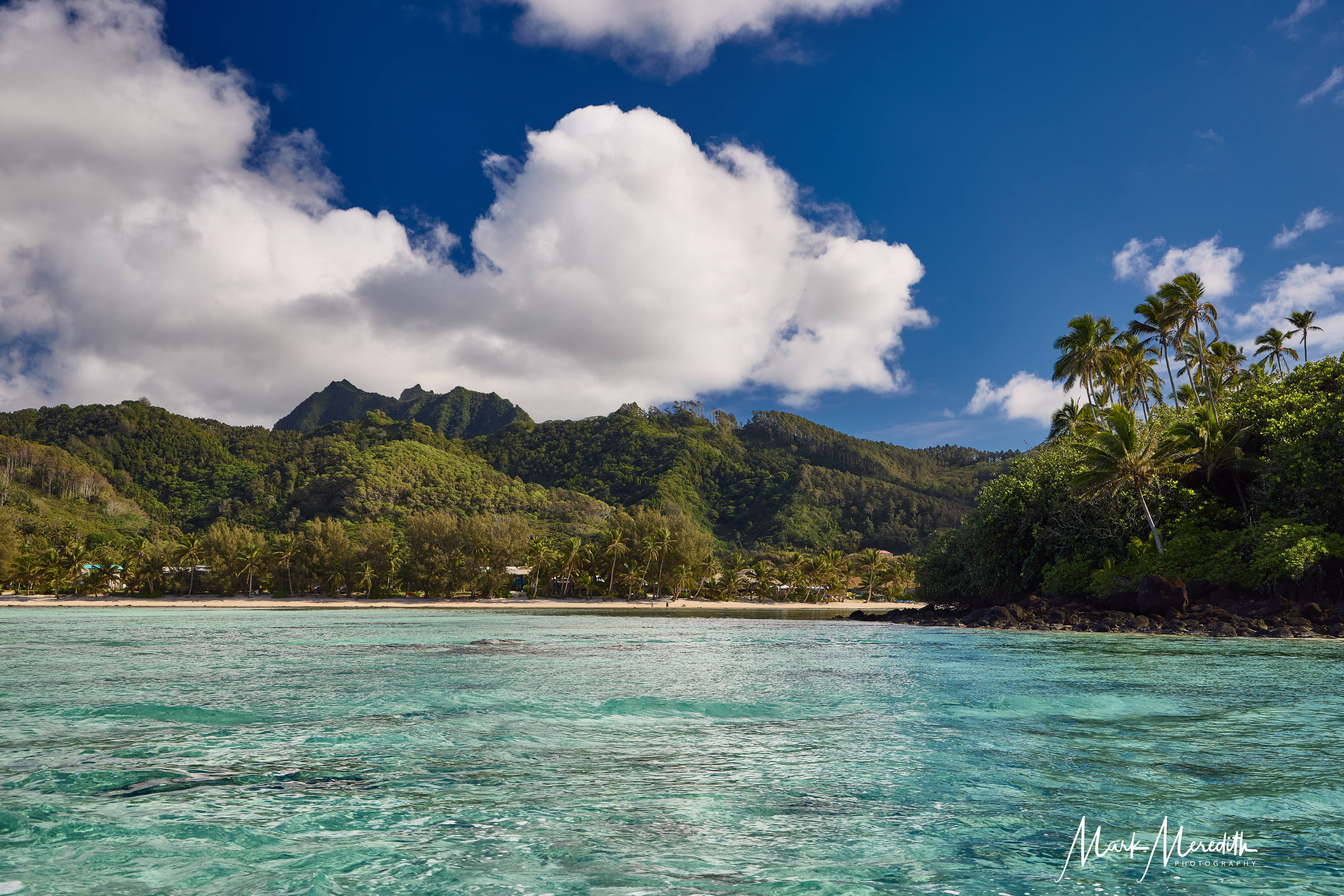
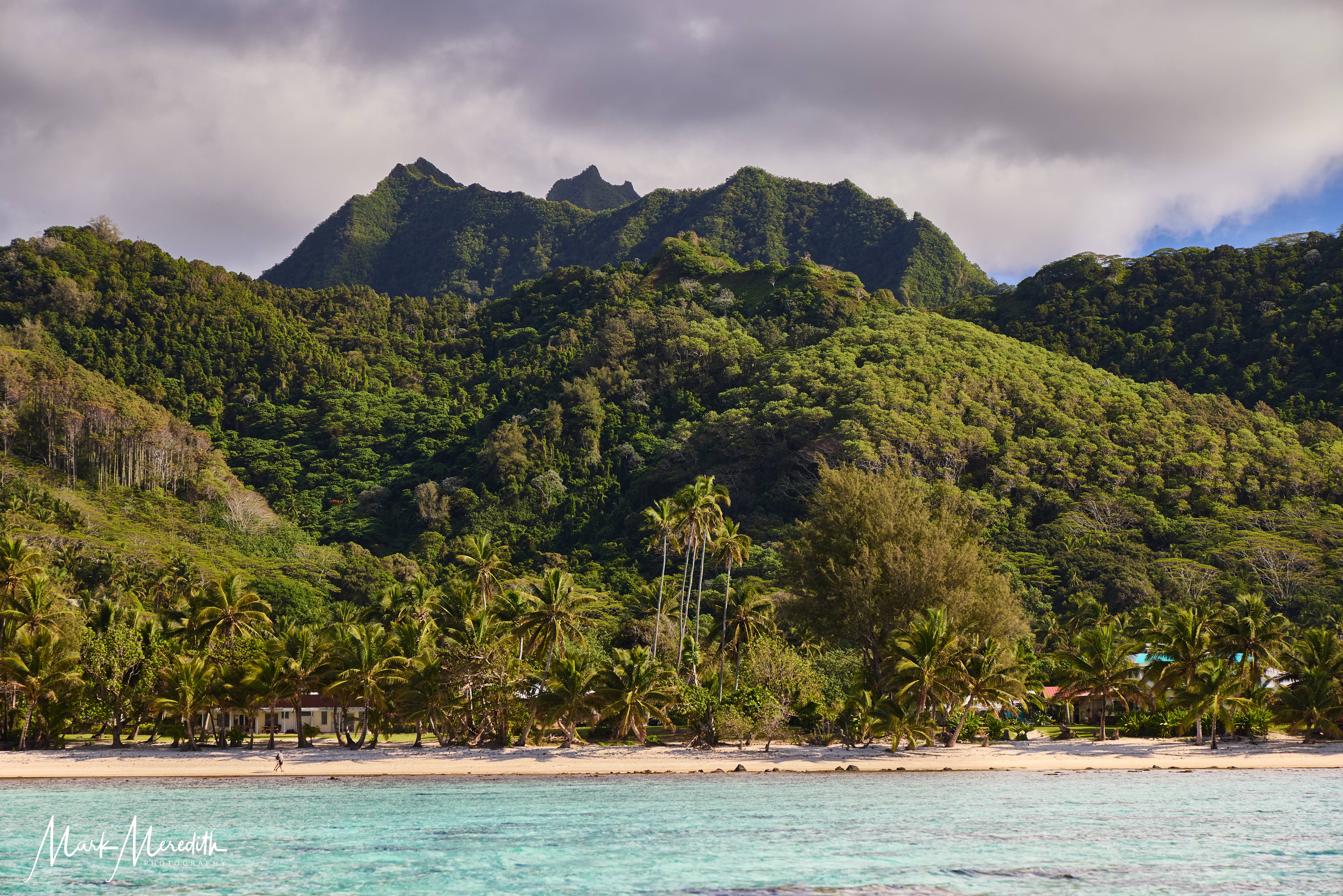
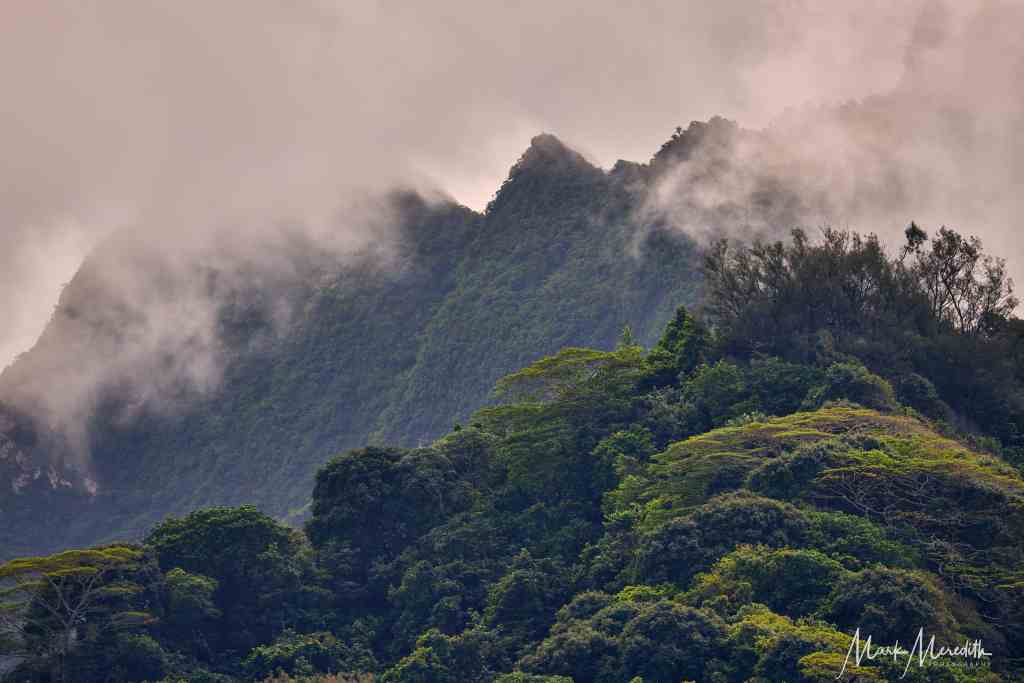
To help protect this idyllic appearance, it is famously described that no building in the Cook Islands may exceed the height of a coconut tree. In fact, government building regulations give a maximum of 12 metres, or three or four storeys, shorter than many of the iconic trees on Rarotonga.
Because of its dramatic topography, the island’s development space is limited to a narrow circular strip running along the main coastal circular road. Hotels, resorts, villas, self-catering units and holiday homes have been constructed mostly along the beaches of the lagoon, but do not intrude.
The effect is such that as one travels clockwise, or anti-clockwise, the view along the coastline, at least, remains unspoilt and tranquil; no tall, unsightly structures disturb the harmonious mix of forested mountains, coconut trees and blue lagoon.
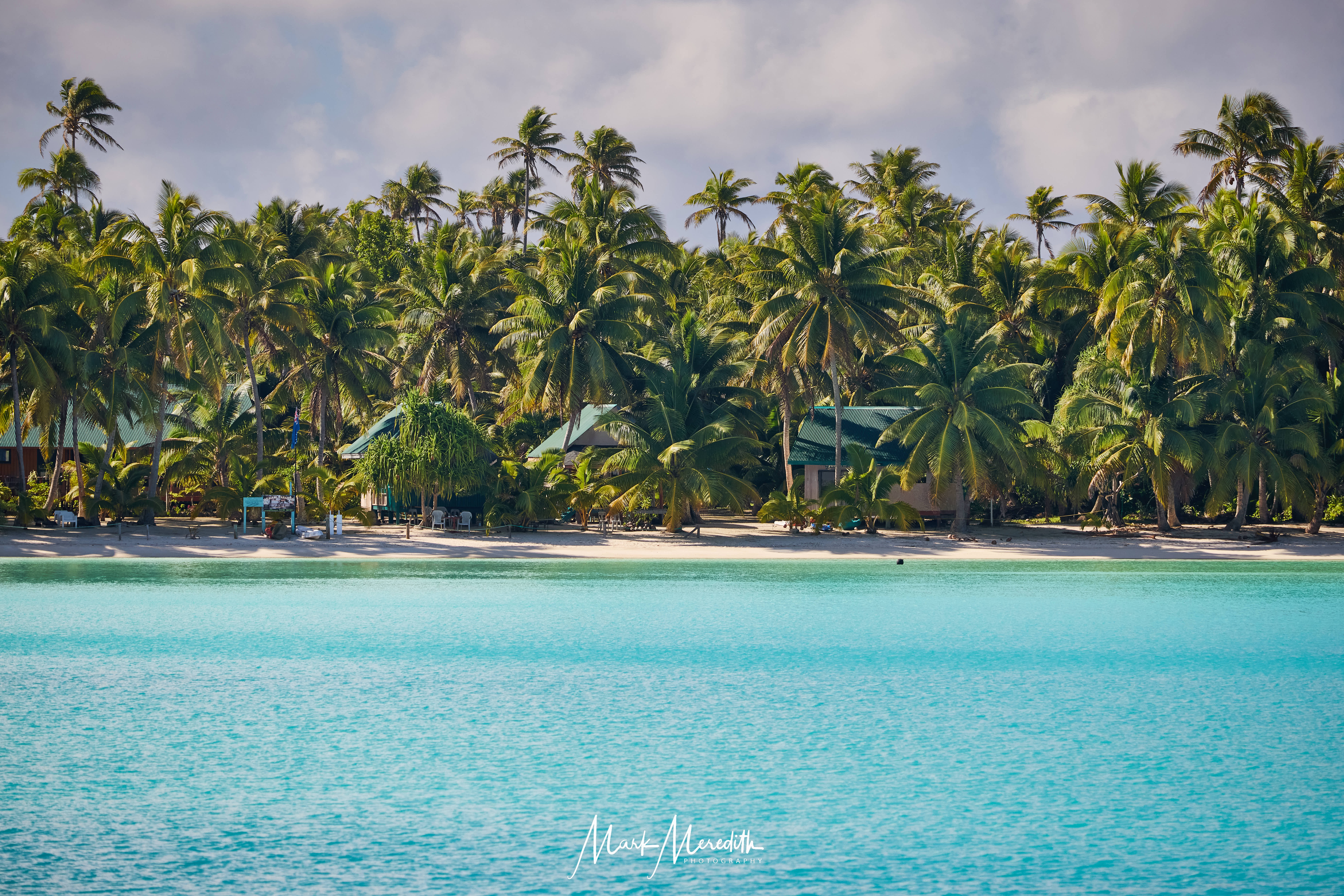
Instead, the island is characterised by its restrained tourism infrastructure, the 280 room, three-storey Edgewater Resort an exception to the rule. The resorts, often of thatched roof style Polynesian villas and cabanas, are mostly medium sized (typically 20-60 rooms), blending in with the landscape like many of the smaller boutique hotels and 600 holiday homes.
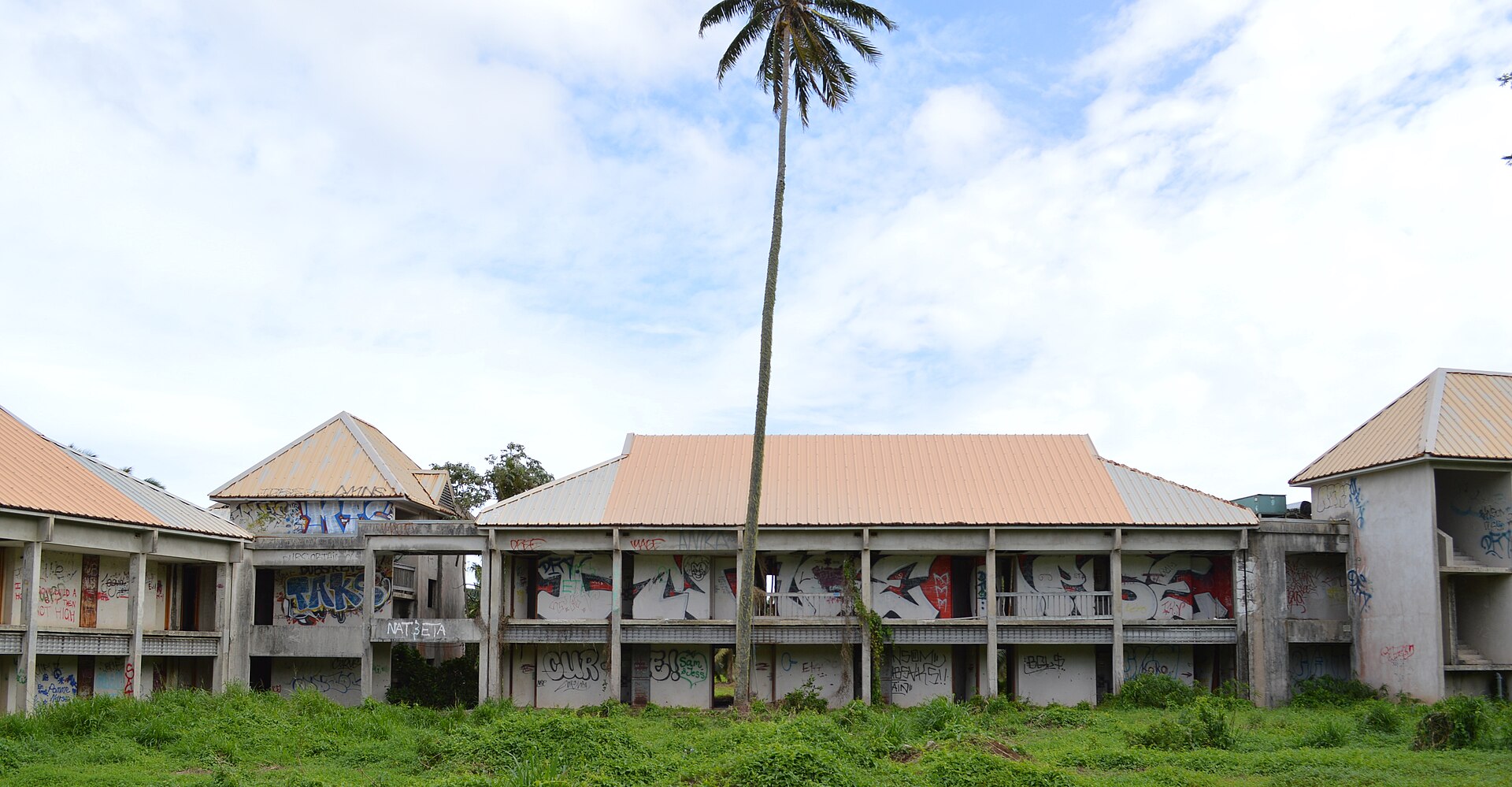
But in one location that harmony is shattered by the decaying white elephant of a derelict resort that virtually bankrupted the government in the early 1990s. Construction of a 250 room Sheraton Hotel, Rarotonga’s first attempt at a 5-star resort, was abandoned after shenanigans involving the Italian mafia and a curse laid on the land by the local tribe. Hilton Hotels tried their luck afterwards and failed also.
If ever there was a salutary lesson for Tobago into the consequences of making the wrong development choices it’s here in Vaimaanga. The almost completed buildings – ugly concrete of dated design, displaying no connection with the land upon which they squat – remain an inescapable reminder of how greed and folly can destroy somewhere beautiful and precious.
Such is its notoriety, the abandoned Sheraton, now used as a paintball site, draws visitors who come to wander amidst the graffiti-clad desolation in morbid fascination.
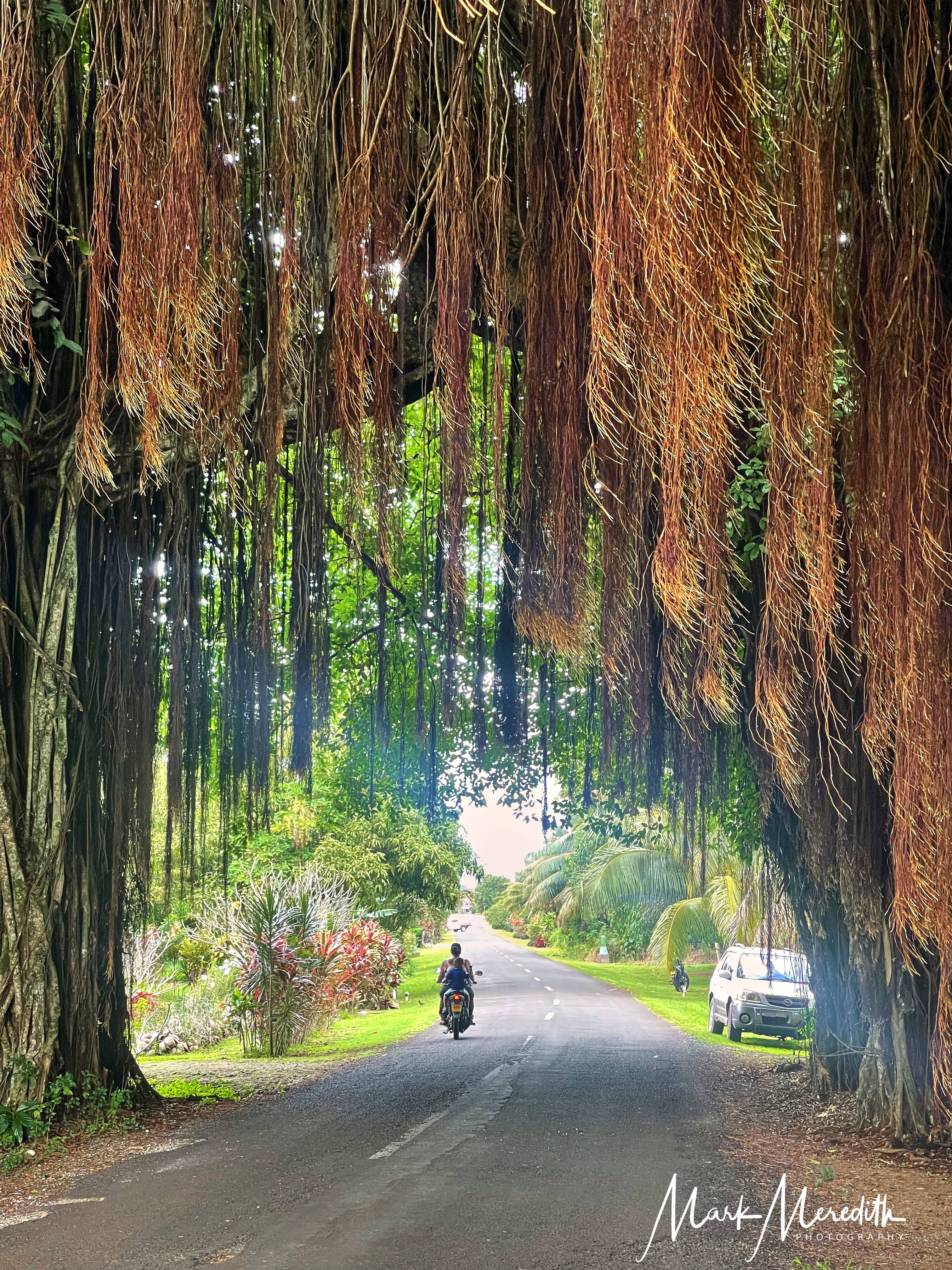
Thankfully, most tourists have better things to do in Rarotonga and whizz on by, likely on scooters, along the Ara Tapu circular road past watersports outlets, bars, restaurants, cafes, and many splendid churches. It takes about 45 minutes to circle the island by car or scooter. The speed limit is 50kmh, which makes for a relaxing driving experience that Tobago’s visitors can only dream of.
There isn’t a great difference in accommodation room stock numbers between the Cook Islands and Tobago: recent data suggests 3,305 and 2,500 respectively.
But while politicians and developers in T&T push for large scale hotel/resort construction, ignoring the chronic under-occupancy of existing room stock crippling Tobago, the Cooks have taken the opposite approach and achieved room occupancy rates between 60-80 per cent.
Their deliberate low-key policy focusing on smaller scale, attractive, high quality resorts/hotels and holiday homes, at the same time providing an immersive cultural experience, has paid off in other ways: Lonely Planet named the Cook Islands its top destination in 2022; at the World Travel Awards it has picked up “Leading Oceania Destination” for the last three years.
In 2023/24 the Cooks almost bounced back to pre-Covid levels (171,713 visitors in 2019), attracting 163,552 international tourists – almost double Tobago’s very best year in 2005 of 87,796 arrivals before the latter’s calamitous decline.
Cook Islands visitor satisfaction ratings run at 94% approval, with those willing to recommend the Cooks at 98%; while 2023 data showed 67% were return visitors.
Five airlines currently service Rarotonga (Air Rarotonga serves the other Cook Islands) with Air New Zealand carrying the vast majority of passengers. The island receives up to 26 international flights per week (peak) at a capacity averaging 78%.
———
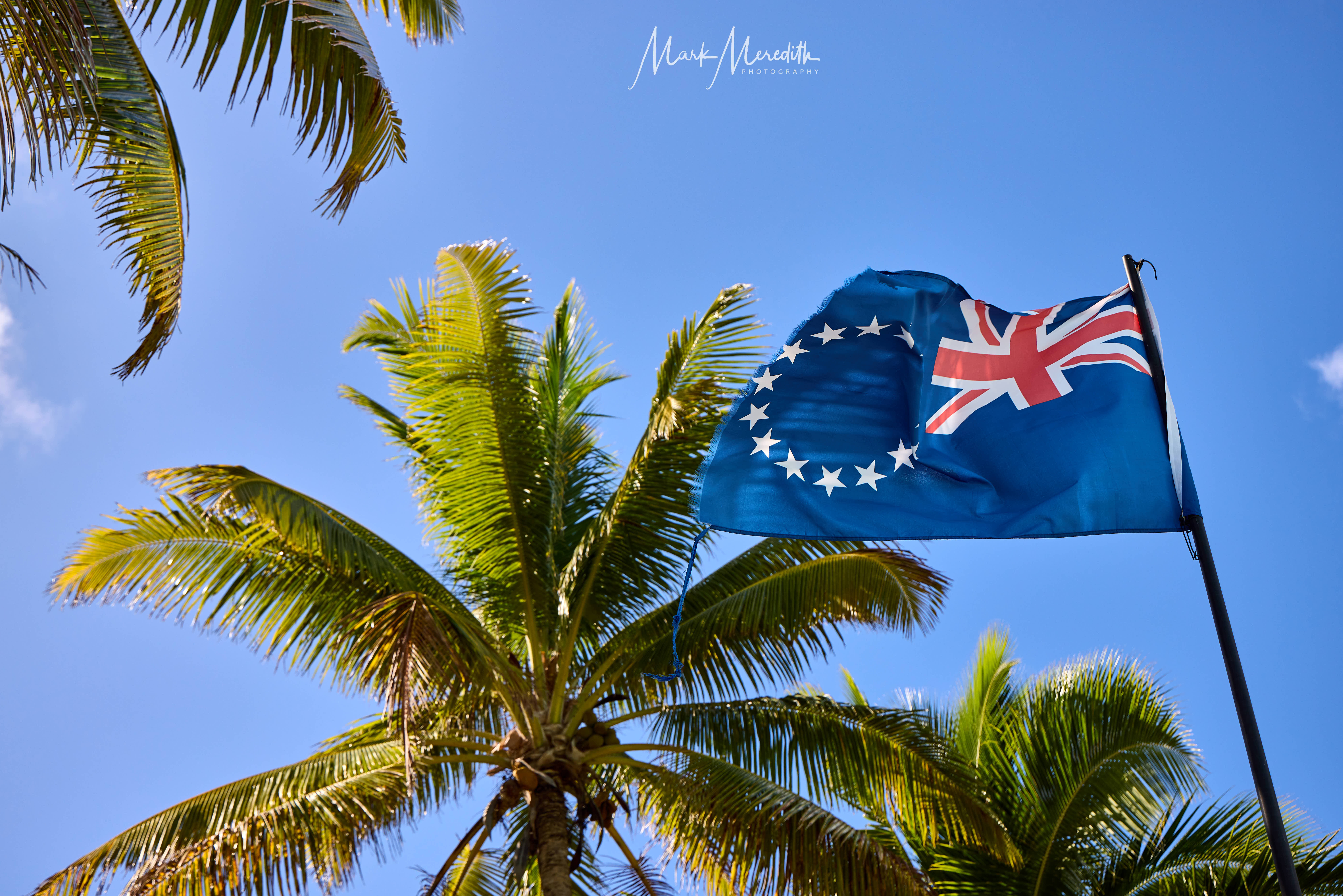
Located between French Polynesia and Fiji, the Cook Islands are a self-governing state (with its own parliament) of 15 islands in “free association” with New Zealand; part of the “Realm of New Zealand” sharing King Charles III as Head of State. The islands need New Zealand as Tobago needs Trinidad.
In the last three years New Zealand has given US$112 million in development assistance to the Cooks as well as non-financial aid and sectoral support in the areas of health, governance, education, environment, disaster response and infrastructure. It also funded and built Rarotonga’s international airport as a joint venture with the Cooks in 1974.
Every Cook Islander is entitled to a New Zealand passport, and the majority of the Cooks’ diaspora have taken advantage of the right to live and work there, about 80,000 people.
Rarotonga and its brother, Aitutaki, are dependent on tourism in a way many Caribbean islands are, but more so: this accounts for over 70 per cent of the Cook Islands’ GDP.
New Zealand has been a willing partner developing that tourism industry. It committed NZ$4.7 (TT$18.6) million over four years to assist tourism marketing in 2024. It also supplies the vast majority of tourists that visit the Cooks, just as Trinidad does to Tobago.
June 2025 figures show over 70% of all tourist arrivals were Kiwis, for who travelling on holiday to “Raro”, a 3-hour flight from Auckland, is almost a rite of passage, like Trinis to Tobago.
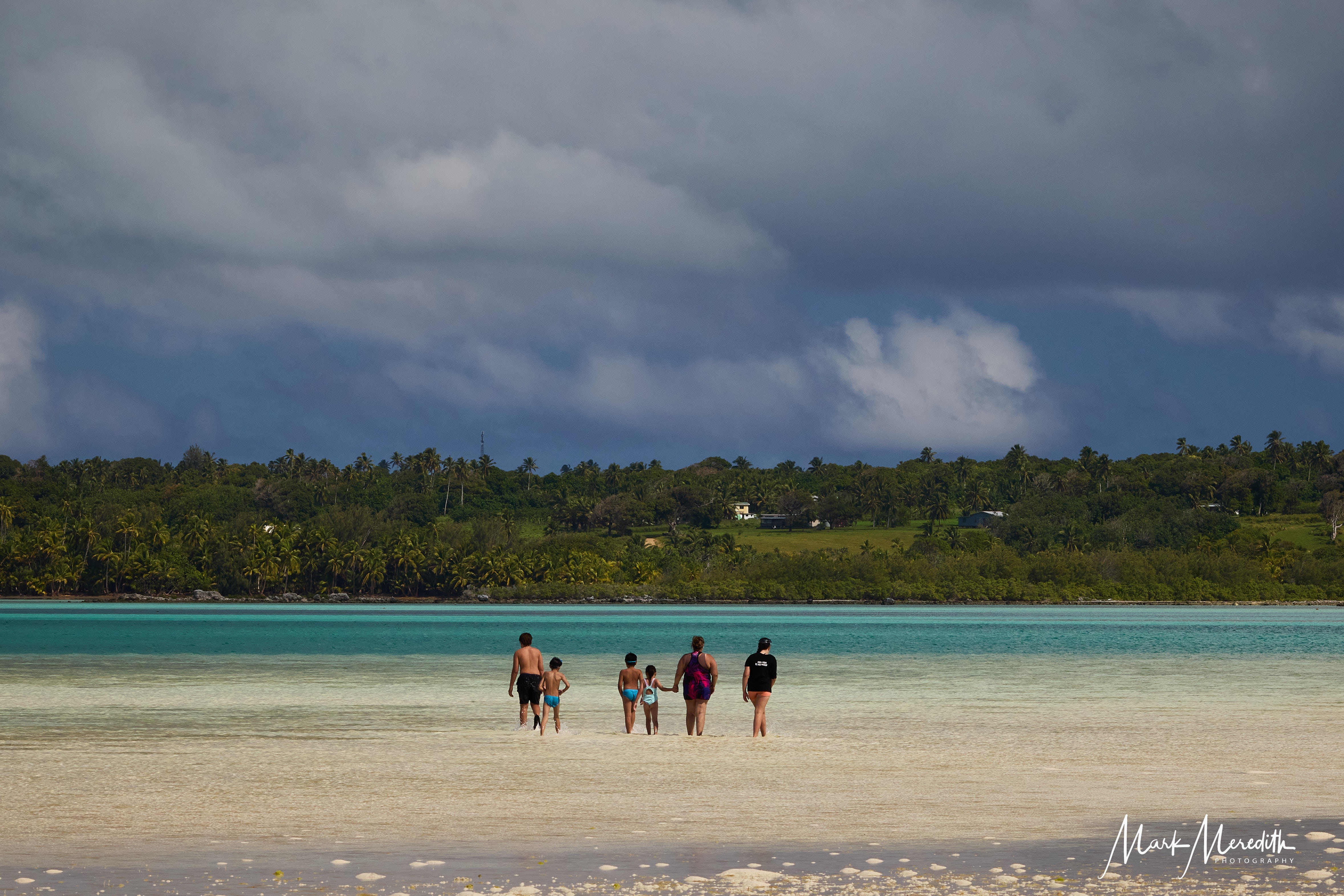
Similarities are obvious: it’s beautiful, so are the beaches, and it’s lush, green and hot; the vibe is as laid back in the Pacific islands as it is in the Caribbean and the people are as warm and outgoing. But the tourism experience in the Cook Islands is on another level to Tobago.
“Kia Orana”, may you live long, is the greeting everywhere. From then on, unfailingly in our experience, you are attended to with an enthusiasm and friendliness which validates, very strongly, one’s decision to fly to this speck in the Pacific Ocean; one reason why so many visitors return.
How does a 10,000 resident population on Rarotonga cope with an influx of 170,000 tourists a year? How do they manage to produce a level of service to the standard they do? How is it that the heaving restaurants don’t buckle under the strain?
The shortfall in hospitality staff because of their large expat population is made up by experienced workers from Fiji and the Philippines, temporary residents and contract workers who earn more in Rarotonga than they can at home. In 2023 about 62% per cent of Rarotongans were involved in the tourism industry.
One ex-tourism professional in Trinidad told me that given Tobago’s inability to produce enough hospitality staff of the required professional calibre to compete with the rest of the Caribbean, that shortfall should be sourced elsewhere. Well, it certainly works in the Pacific.
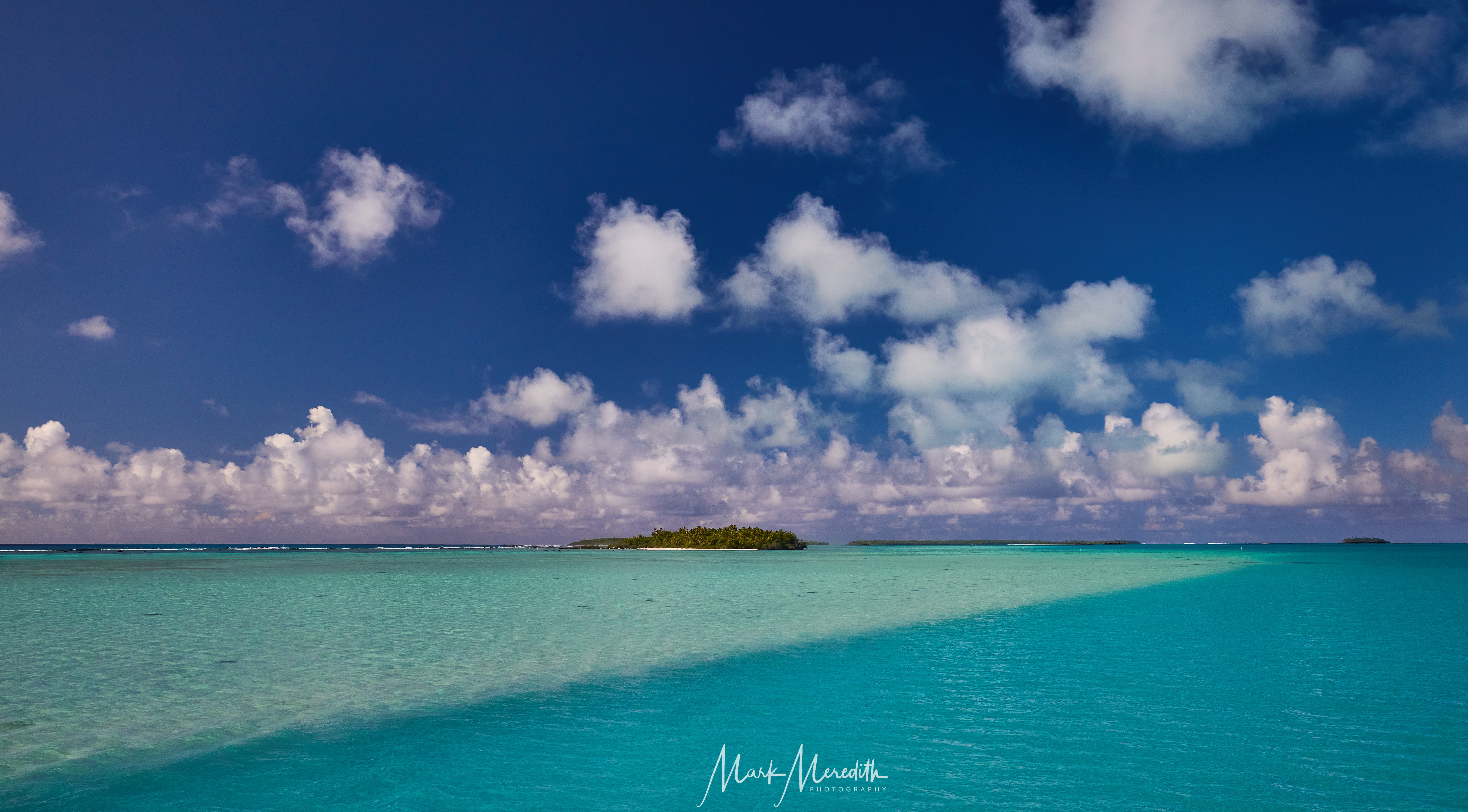
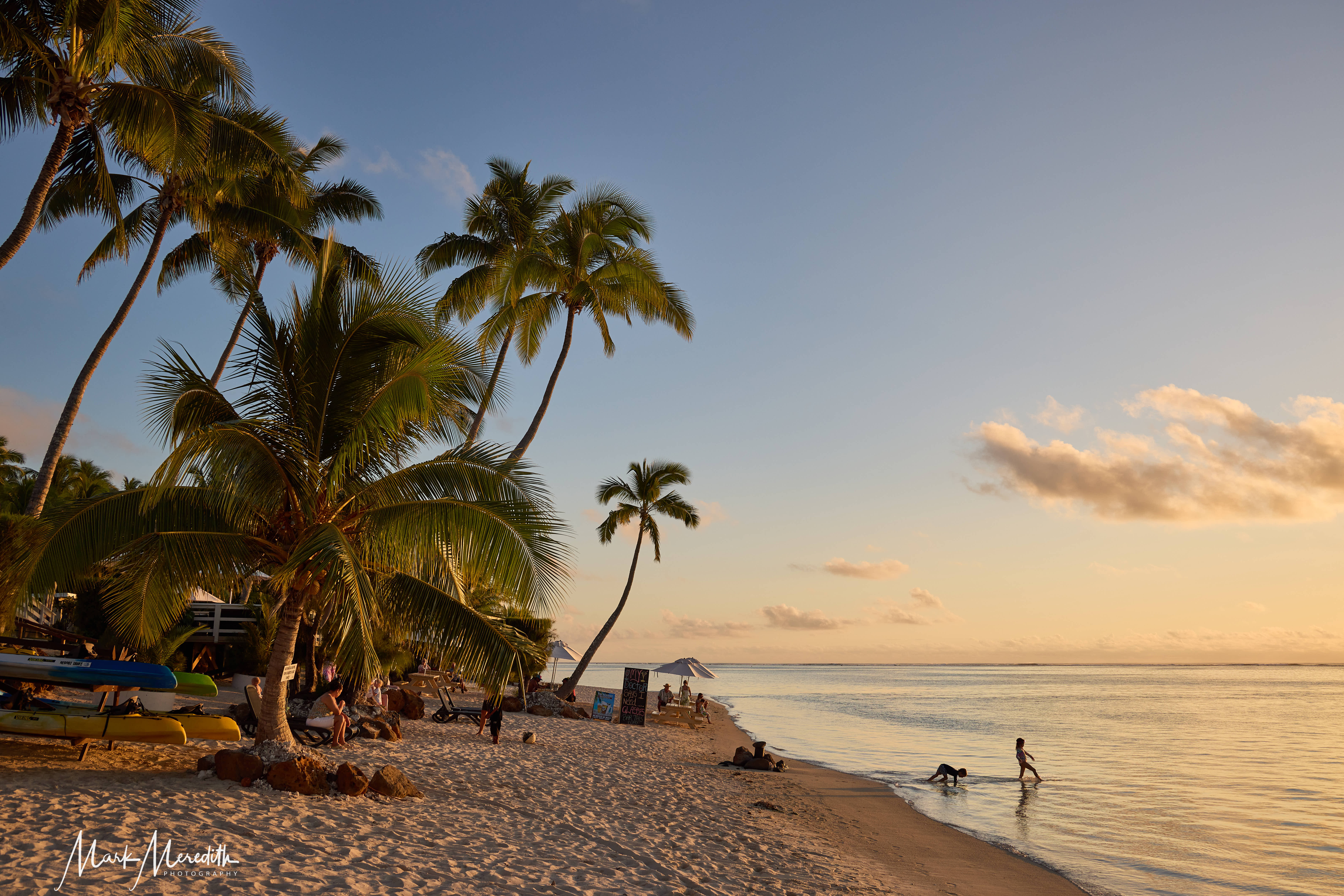
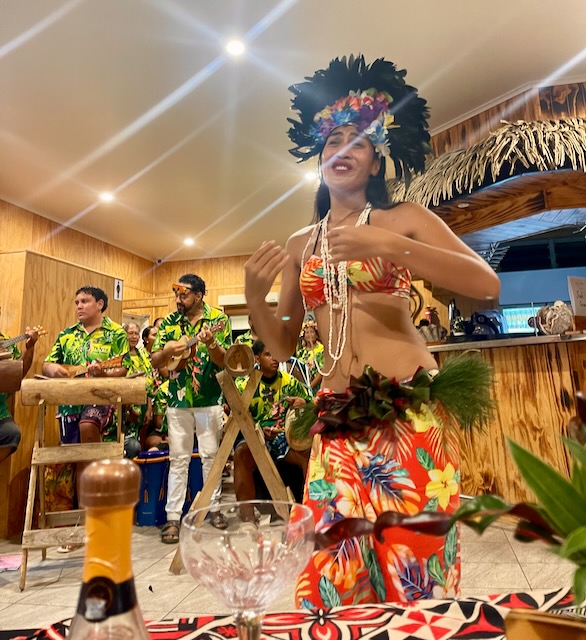
An the brand new Resort Tava’e on Aitutaki, a 40 minute flight north of Rarotonga, which we fortunately decide to book for three nights, the staff are all proudly from the island and produce one of the most memorably hospitable stays we have experienced on any of our travels.
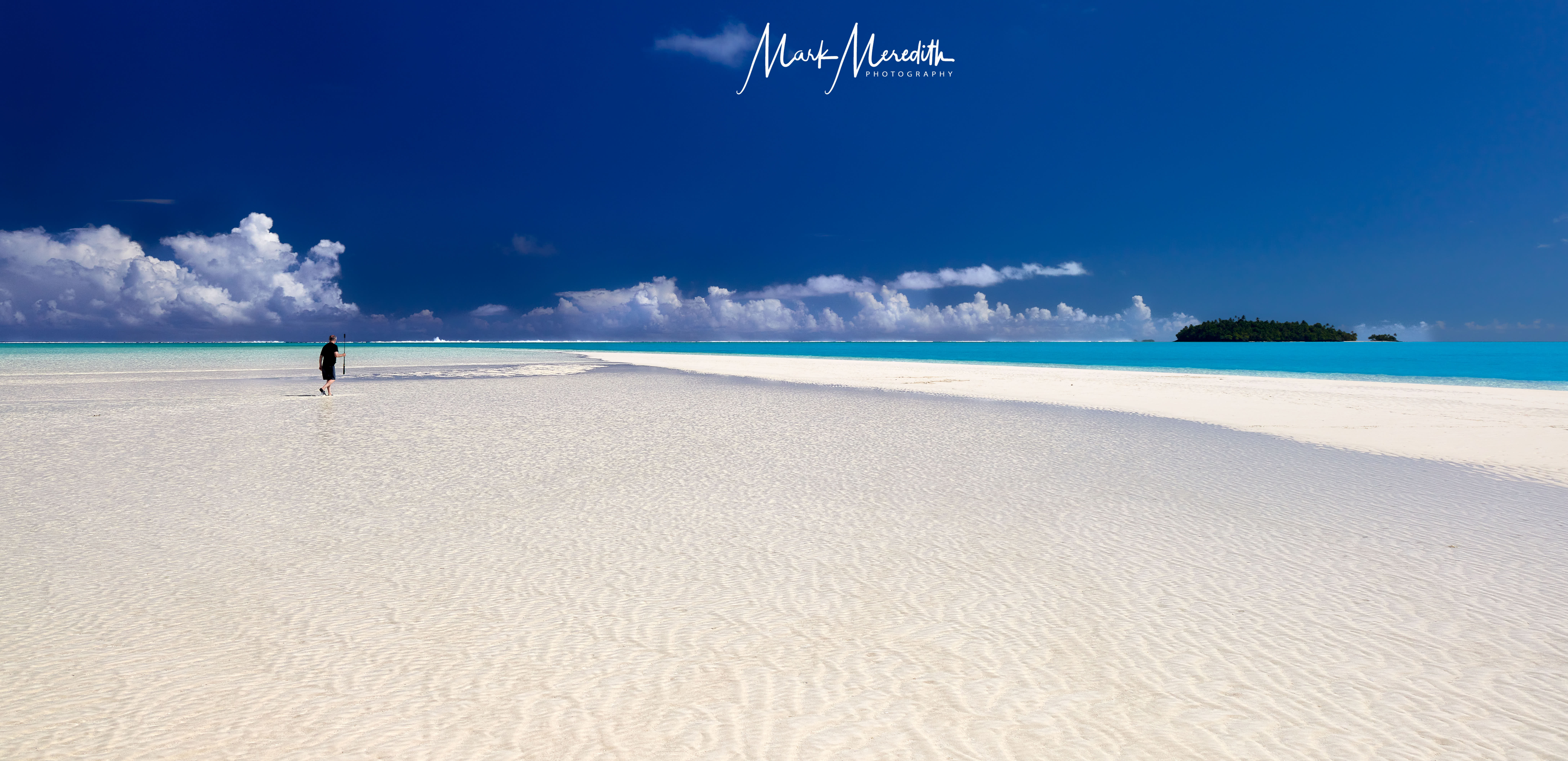
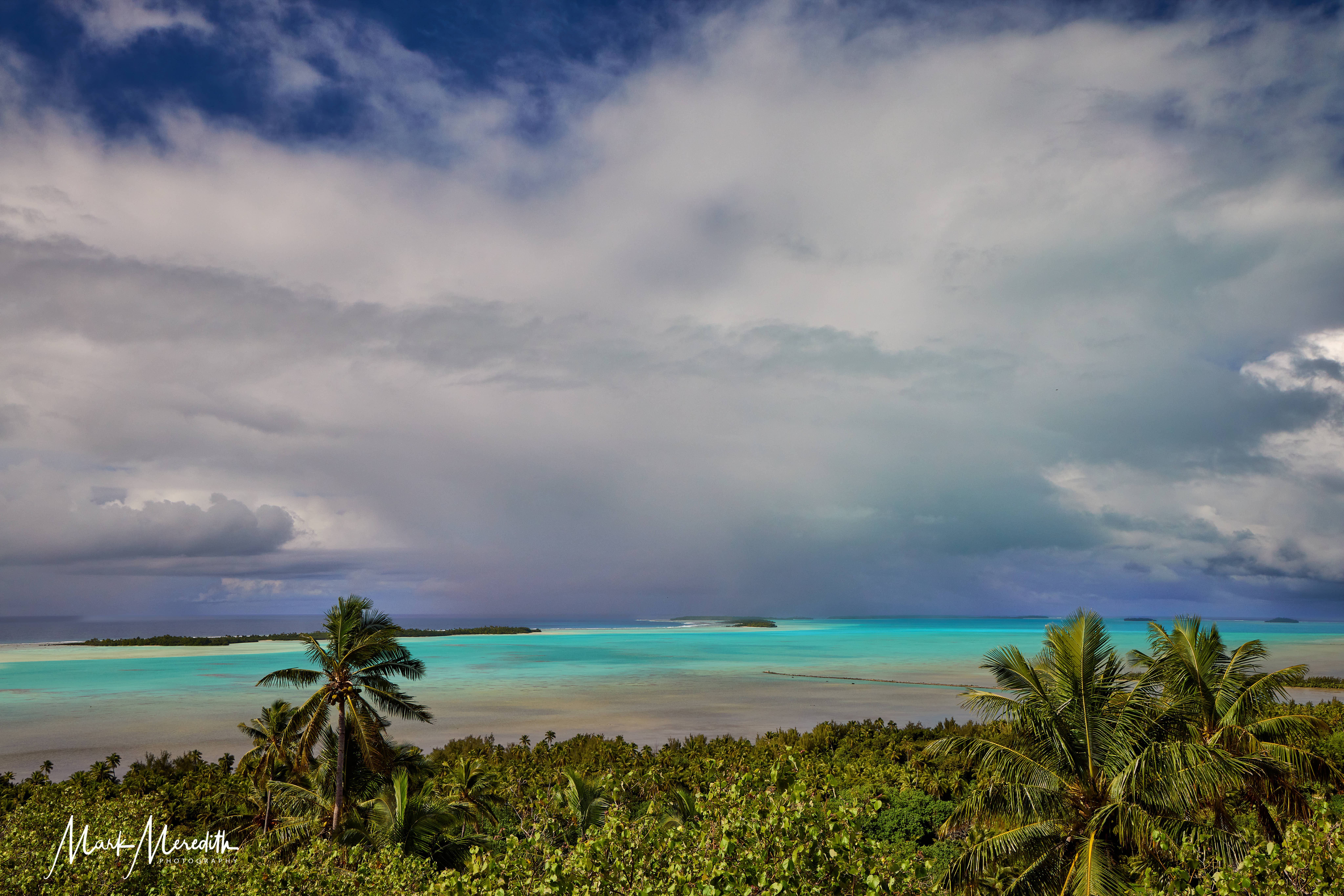
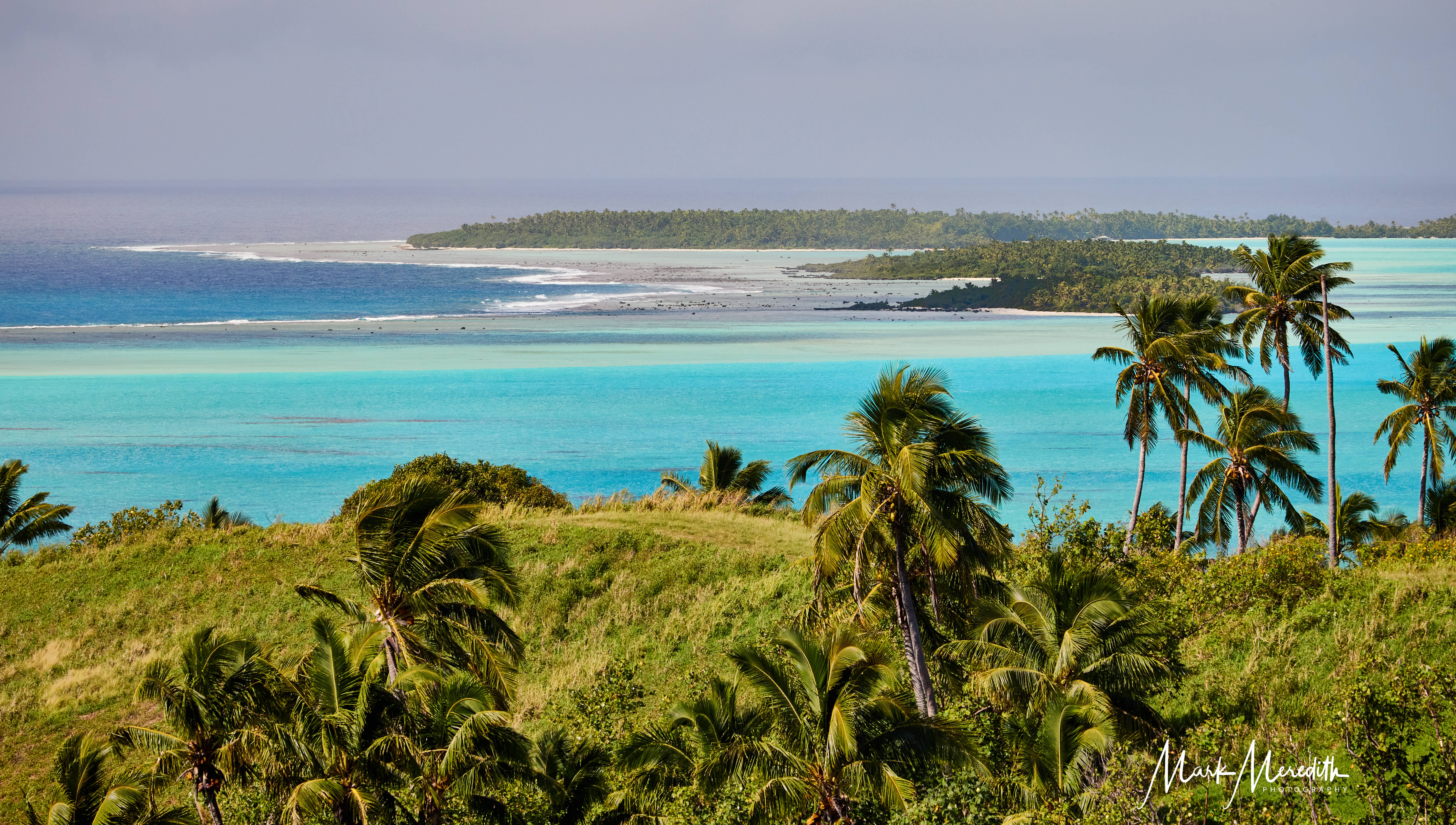
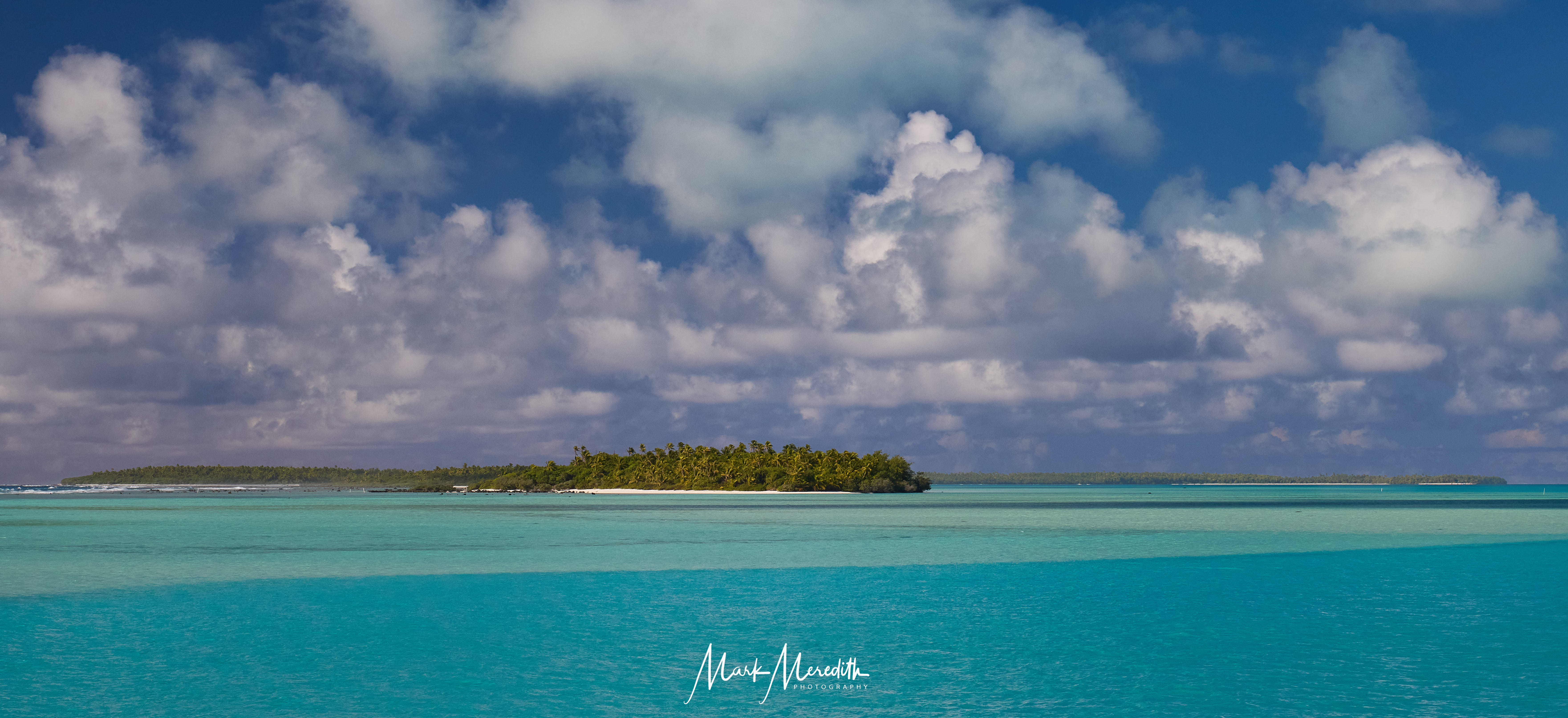
Aitutaki atoll is only 18.1 km², but its lagoon area is 74 km², larger than big brother Rarotonga. It was described as the world’s most beautiful by the founder of Lonely Planet, Tony Wheeler. It is absolutely stunning, otherworldly. The atoll, population 1,800, is the other main tourist destination in the Cook Islands and has stock of a few hundred rooms.
Resort Tava’e, which opened in October 2023 is, like everywhere in Aitutaki, restrained and tasteful: no large edifices on this slice of paradise drown out the surroundings. Tava’e has five beachfront rooms, restaurant and deck, and 16 rooms tucked around two small swimming pools. What you see of it from the water is minimal. Aitutaki, where less is more.
.
——–
In the Koka Lagoon Cruises boat on Rarotonga, meanwhile, we’ve finished our nice but unspectacular snorkel and Boomba and the boys are serenading us acoustically with Polynesian harmonies and catchy ukuleles. Not for them the ear-splitting amplification unprepared tourists want to escape but cannot in Buccoo’s lagoon.
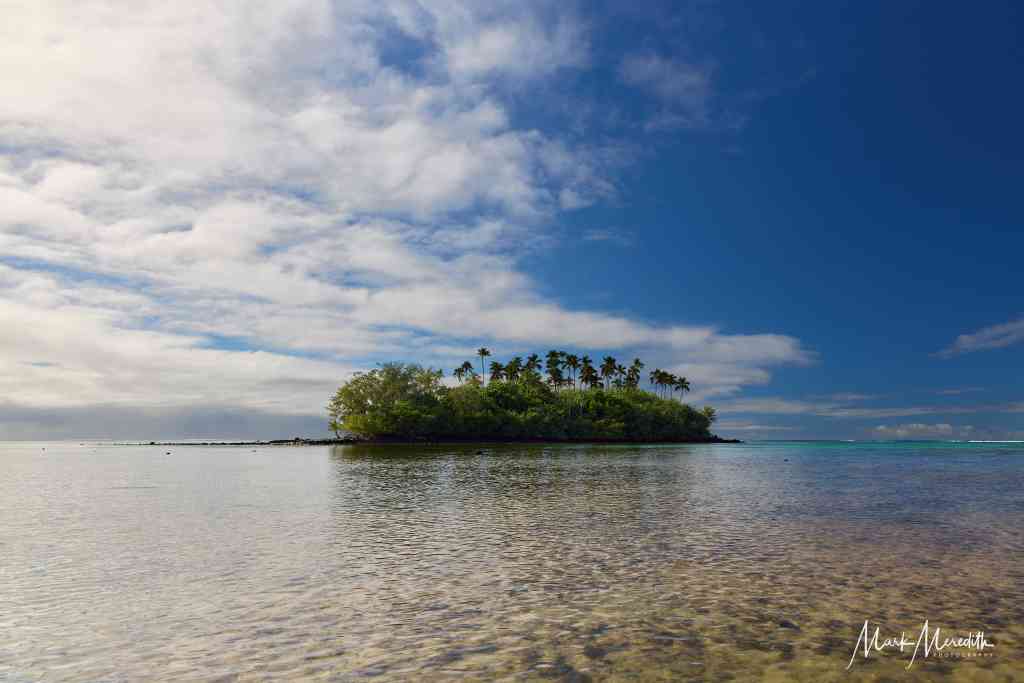
We land on tiny Koromiri Island, the motu in Muri’s lagoon, just across the channel from our cabana. Unlike Tobago’s No Mans Land, there is zero litter or loud music; no unregulated structures despoil it; no sense of the anarchy to be found around Buccoo’s Sheerbird Point exists.
In the grove of coconuts we devour delicious barbecued chicken and fish with mounds of tropical produce. Women and children are invited to help themselves first; we “warriors” must wait.
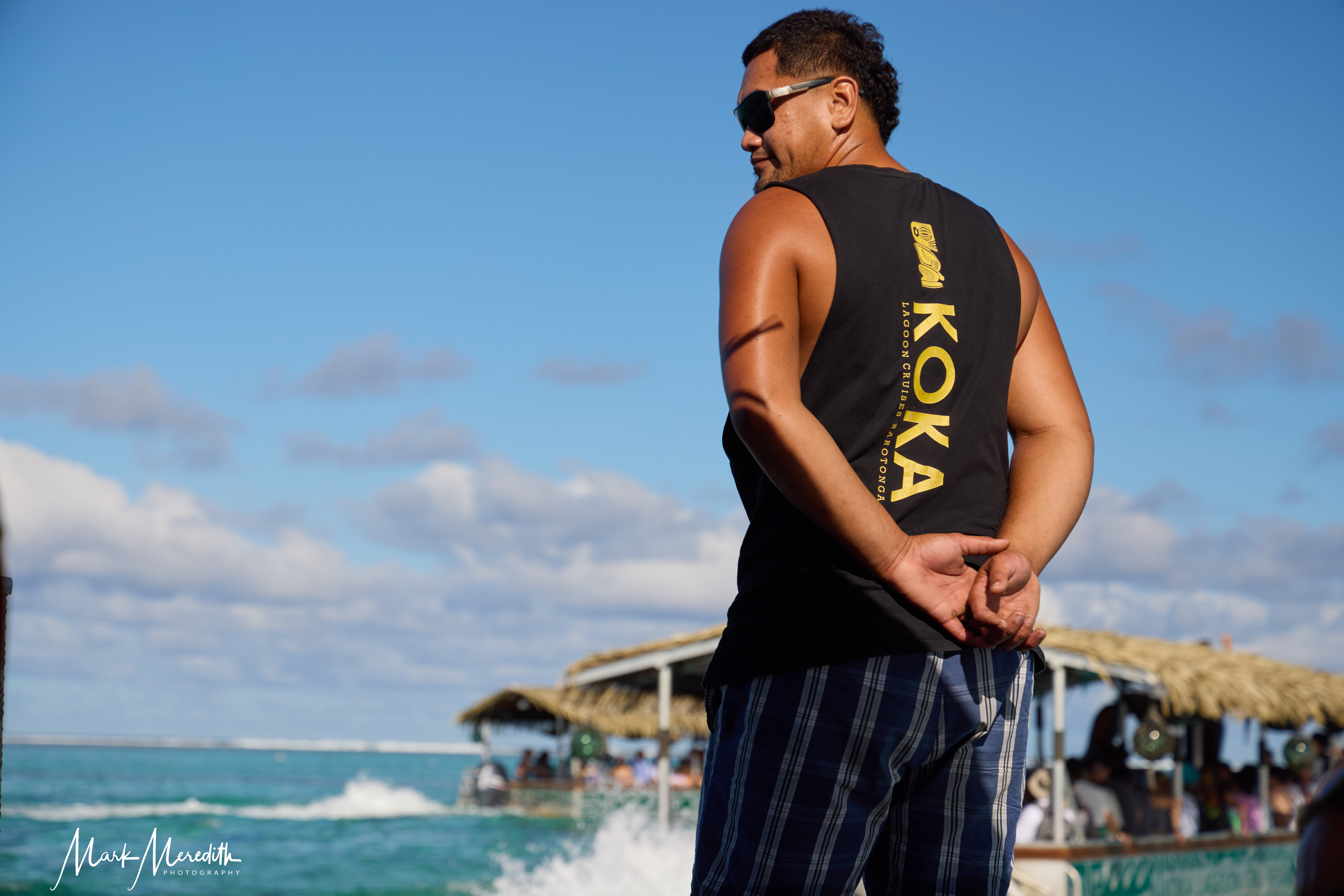
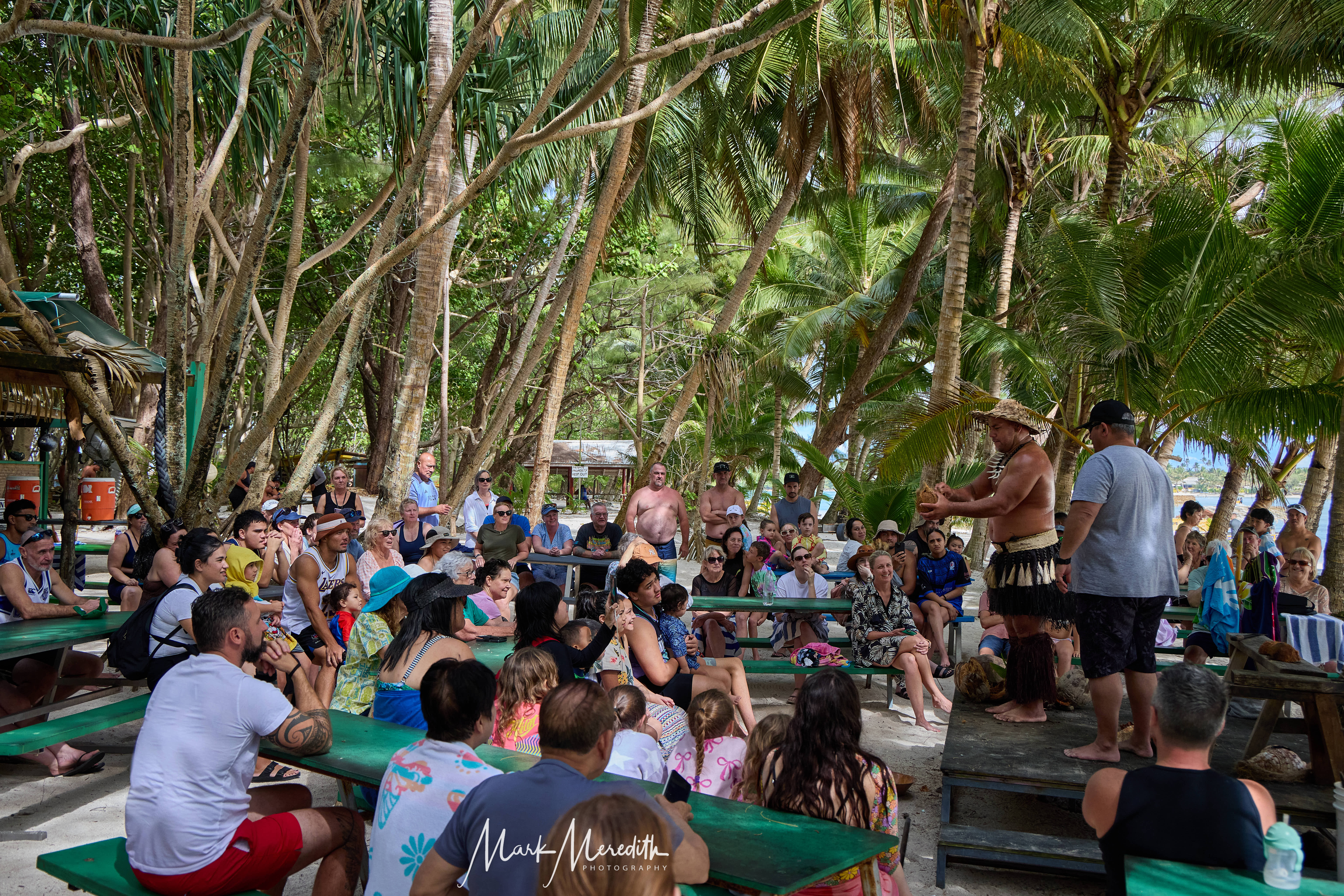
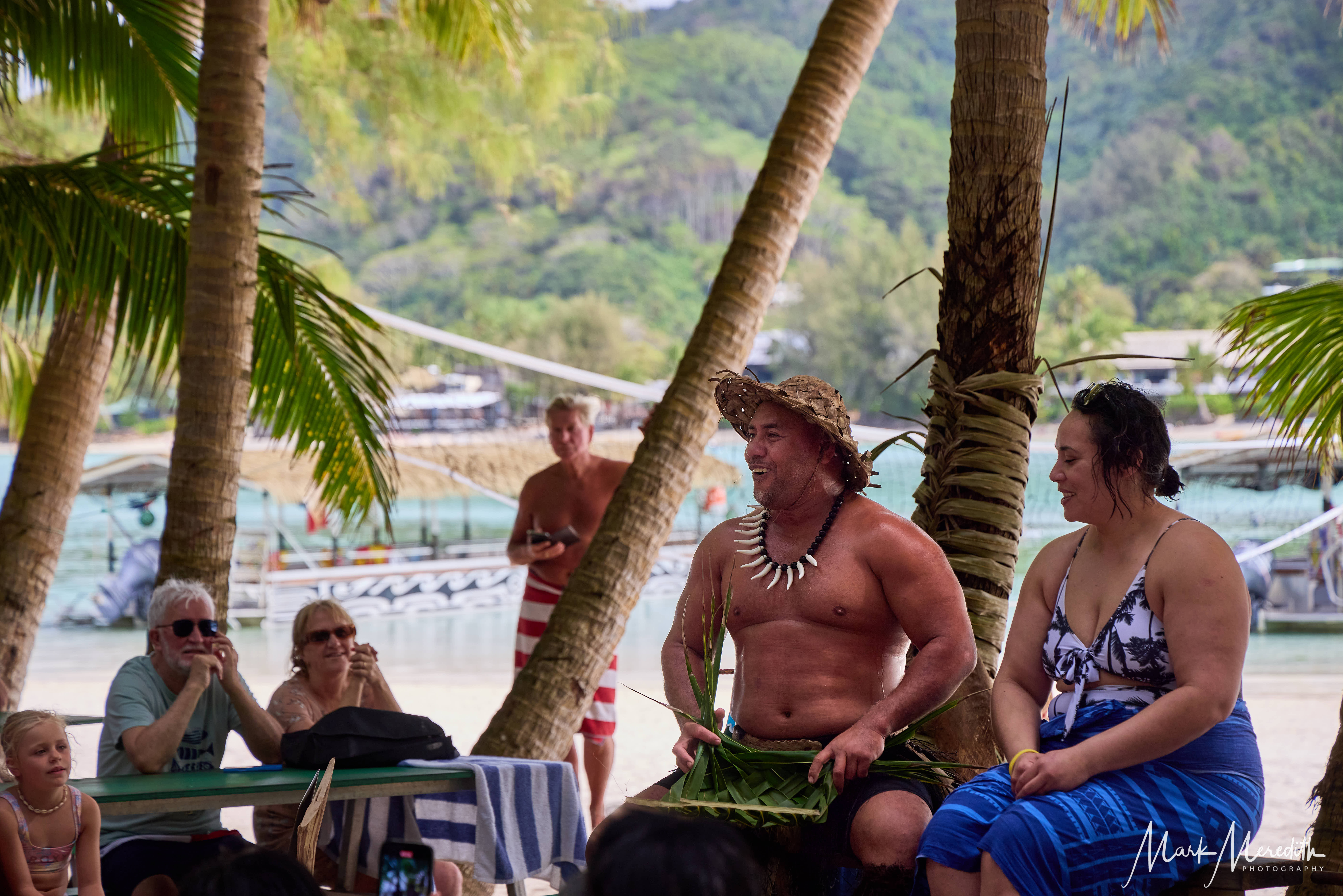
Captain Awesome steps up to a raised platform around which we are invited to sit. He has shed his Koka t-shirt and is bare chested, in Cook Islands warrior mode, his persona transformed also: from quiet skipper to extrovert funnyman.
For the next 45 minutes he regales the tourists about the islands’ most important tree, the humble coconut: its historic culture in Polynesia, how it is used, weaved and opened. Two young warriors from the crowd are invited to climb a tree and remove a coconut. They manage about one meter. With a rope of matted coconut fibres attached to his feet, Captain Awesome bounds up the tree in seconds, a true superhero.
His enthusiasm never wanes for a moment and he’ll do it all again tomorrow. And why not? Three full boatloads at US$60 per adult.

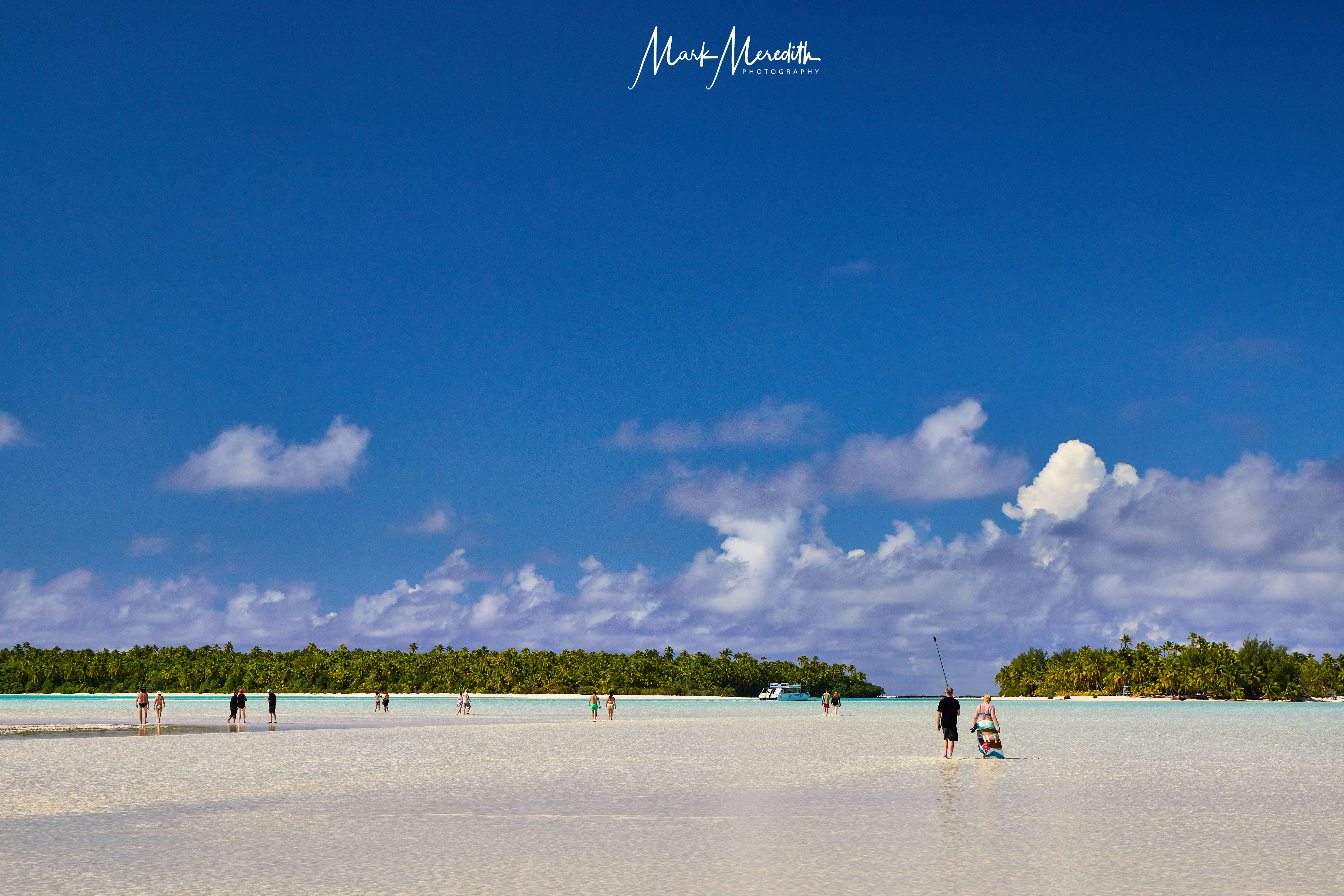
Afterwards, we dip in the lagoon and lie on the sand while Boomba’s ukulele players provide the soothing accompaniment to coconut leaves rustling in the early afternoon heat. Along the sand, Captain Tama’s three cruise boats have unloaded their tourists, but it doesn’t feel overcrowded on Koromiri, just organised, chilled and happy.
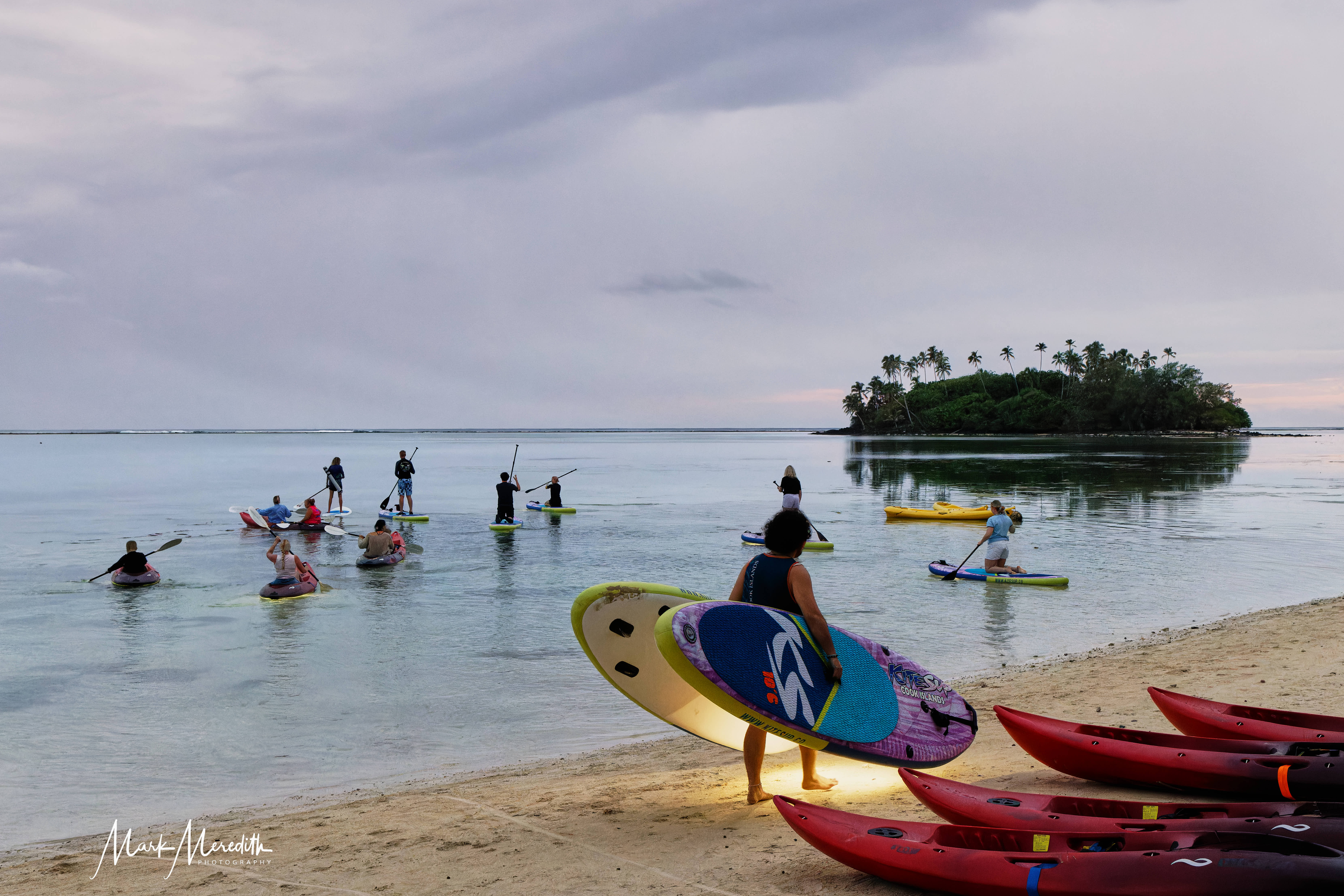
Tonight, there will be traditional music on Koromiri, dancers and a Polynesian fire show. While out in the lagoon, punters on night-time paddle boards and kayaks, illuminated underneath to see corals and whatever is swimming below, will become pools of light moving mysteriously across the dark lagoon.
The next morning in paradise the drumming will start again: the tourists in Rarotonga and Aitutaki will be entertained, thrilled, sated, above and below the water, vindicated by coming here. Then they will leave, most planning to return, even as another flight unloads its cargo.
Tobago, this should be you.

 Photos, Newspaper & Magazine Articles, Travels