
Just as Sandals and Buccoo Reef wasn’t compatible with mega resorts and rich man’s real estate, nor is Rocky Point and Mt Irvine. That is not what Tobago is. This is why Tobago is so special. This is why tourists come. But it will be why they leave, in even greater numbers if Tobago goes down the destructive road planned by Superior Hotels at Rocky Point. \
These are a series of articles written for the Trinidad Sunday Express in 2022 and 2024 explaining the importance of Rocky Point, and the controversial nature of the development, its ownership, and development process.
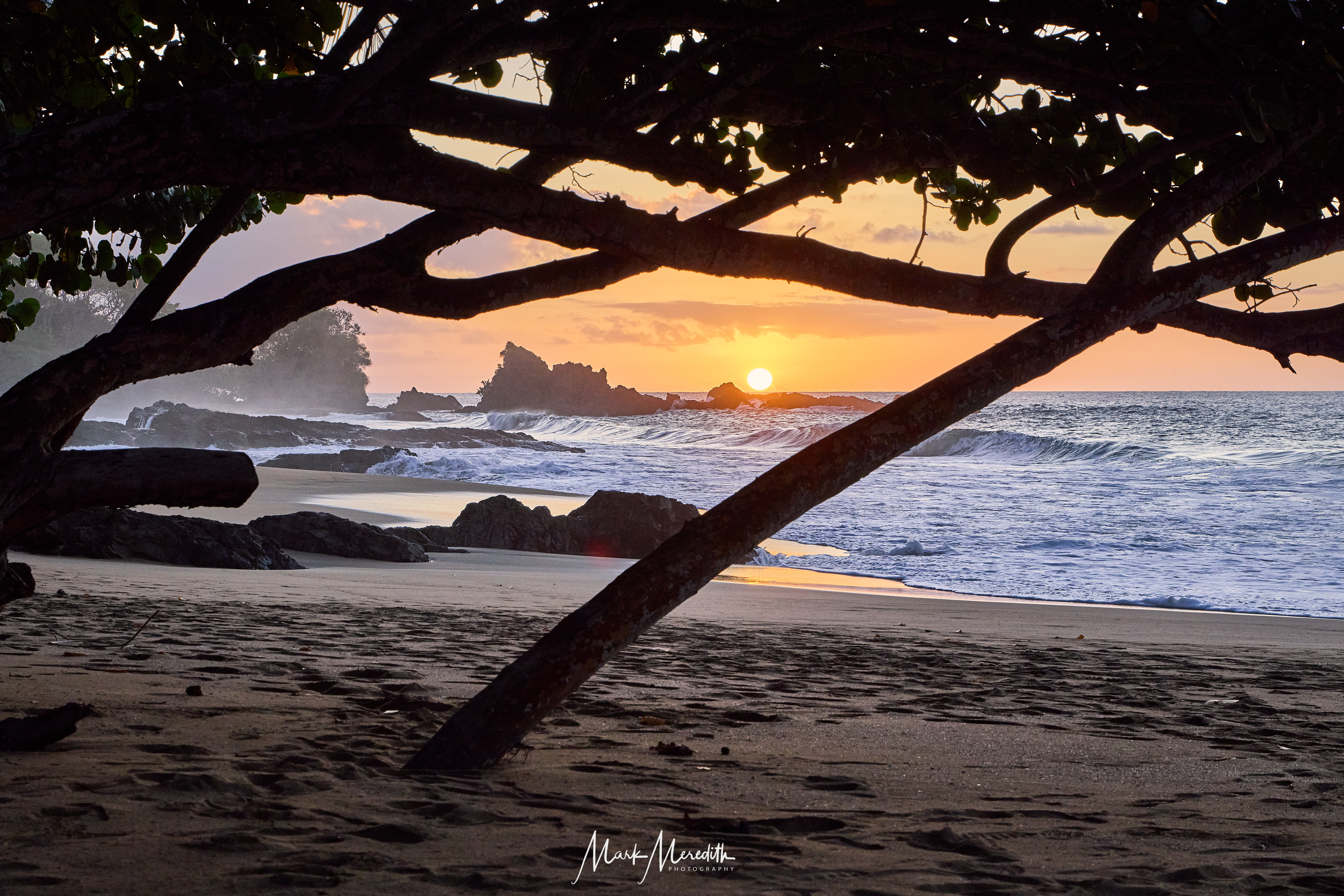
“The Magic Woodland” explores the special nature of Rocky Point’s Back Bay, a vital turtle nesting sight
You can read about the importance and culture of surfing in Mt Irvine, and the alternative plans proposed by the Rocky Point Foundation, both written in 2022 for the Sunday Express in “Way Beyond Ordinary”.
“Wipeout” is the first article and investigates the concept for the Marriott at Rocky Point as first published by the developers Superior Hotels
The failure of the public consultation to address or share development plans, as required by the EM Act, and the vexed question about who really owns Rocky Point are discussed below.
“SOMETHING IS WRONG”

“Something is wrong”, said former Tobago Secretary for Tourism Stanley Beard at the Rocky Point public consultation, questioning how it was that land came to be leased to Superior Hotels for their Marriott-branded hotel and real estate project at Mt Irvine. (See sidebar/story)
It wasn’t the only thing that worried an anxious public attending the first meeting with the developers who wanted to transform their corner of paradise. Into what exactly they didn’t know, but they wanted to find out.
There was standing room only inside with parked cars jamming usually quiet roads outside. The hall in Buccoo was overflowing with people concerned about the scale and impact of such a large development on their peaceful, much treasured area of Mt Irvine.
The image of that peninsula covered by intense development, which was used by Superior Hotels and the THA to promote the project in 2021/22, and by the press ever since, was all anyone really knew about it.

Unless someone had trekked to the Environmental Management Authority (EMA) library HQ in St Clair, or navigated its multi-layered website, and dug out Certificate of Environmental Clearance (CEC) Application 6451/2022, no one would be any the wiser about what was planned for Rocky Point.
But the developers say they don’t know either.
“We haven’t started the project. We don’t know what kind of project we going to have,” claimed Superior Hotel’s John Aboud at the meeting.
He elaborated by explaining that nothing of any importance would be touched, not the coastline, the currents, the reef, marine habitat, not a stone in the water, not the beach, nor turtles (they had a plan to safeguard nesting sites), or the archeological site of Fort Monk.
Everyone was assured that the project was conceptual. “It was now beginning”, said Aboud.
This is not what the CEC application shows.
There are three detailed versions of the “Master Plan”, two modified at the request of the EMA for clarification, the last in November 2022.

These are plans for a very specific project, including a considerable real estate component, right down to detailing the steps leading to Back Bay. The Sunday Express asked Superior Hotels why they were not shown at the consultation.
We did not get a response.

Margarita Hinksoni of the Tobago Heritage Society stood at the microphone: “A lot of people here tonight are surprised about how little information there really was, I thought we were coming here to discuss particular plans.”
The Terms of Reference (TOR) drawn up by the EMA for the requirements needed for the Environmental Impact Assessment (EIA) are very specific and the cornerstone of the CEC process. Critics say the Buccoo consultation failed on these most important levels.
The TOR is clear that the information shared at the consultation must include all the project’s proposed designs and alternative actions. None were presented. There were no descriptions of an EIA process, or the precise location of the project and its components. There were no timelines, resources, and schedules associated with the activities, or any details on the studies to be undertaken.
The Express asked the developers: “Should you not hold a new public meeting to rectify these failings so the public can ask the necessary questions having all the information at hand instead of none, and not wait until after the EIA is completed as you indicated you would do?”
We received no response.


In another statement to the audience, Aboud said:
“We are on pause now waiting to see what happens with the approvals and once we have the approvals we will be able to design our facility in line with the approvals that we get.”
This suggested their detailed designs would only come after their CEC. The Express put it to Superior Hotels that this was putting the cart before the horse. Detailed designs are required for the EIA which informs the EMA whether a CEC should be granted or not.
There was no comment from the developer.
The Express asked the EMA about the apparent shortcomings in the developers’ consultation. They replied that the EMA “will hold the Applicant strictly to the requirements of the TOR; and upon completion of the EIA report the EMA and its valued Stakeholders will have the opportunity to thoroughly review the contents thereof.”
The land at Rocky Point leased by Evolving TecKnologies and Enterprise Development Company (Eteck) to Superior Hotels was awarded on the basis that at least a 200 room hotel be established there.
Superior Hotels, the winner of what John Aboud called a “vigorous selection process”, tacked on an extensive residential real estate component, shown in their earlier graphics and in their CEC application.
Concerns by many about this additional, much larger footprint on Rocky Point were dismissed by Aboud at the consultation: “People were accusing us of making this a residential project, blah, blah, blah . . . if we do not get an approval from the EMA the journey stops right there and we have a problem with Eteck.”

The transformation from untouched wilderness to what some see as no more than a gated community for the privileged lies at the heart of objections, the consultation showed, for many different ecological and cultural reasons.
“That piece of property has value far exceeding that of putting 200 hotel rooms on it. It means that piece of real estate has value to the born and bred Tobagonian . . .” emphasised Stanley Beard.
“Don’t get me wrong. I would love to see Marriott, but not on that site. It hurts me to see that (the project plans) being splashed about.”
CONSULTATION SNAPSHOTS
“We would like you to take your plans and move somewhere else. Just go anywhere else except this particular spot that we hold so dear”
“It seems that every third person who drowns in Tobago drowns off Rocky Point. How do you mitigate that?”
“I’ve not heard one member of the public lend any support to this project whatsoever, which to my mind means the proposal should be null and void because we don’t want it”
“Why is Back Bay so important to our sea turtle population? Because it is truly unspoilt, untouched, undiscovered and we love it because the turtles come back again and again”
“Can anybody here tell me the last time in the last decade that all the hotels, inns and Airbnbs were packed enough to need another hotel?”
“The trail to the surfing point through the land at Rocky Point has been traversed for half a century by surfers. It is spiritual . . . the wave speaks for our country, not just Tobago. To protect the environment here is to protect our olympic sport”
“Ospreys nest here . . . you should be using this area to educate people not building a gated community for the one percenters”
“We were told Mt Irvine was the one site we should be using to promote diving in Tobago because of the biodiversity of life there . . . it’s already under threat. . . improperly planned development of that point will put further stress on that ecosystem”
“We had a design for a project but it was an architectural project. We didn’t know then that we needed an EIA. Now we know.”

Who Owns Rocky Point?

Stanley Beard, Tobago House of Assembly (THA) MP for 12 years between 1984 to 2001, asked: “Who really and rightfully has ownership of Rocky Point?”
The question of ownership of that land has exercised opponents of the project, including the Rocky Point Foundation (RPF), and others, who have used the Freedom Of Information Act to get those details.
RPF, and Stanley Beard, who in his statements at the consultation questioned whether Eteck really owned Rocky Point, both cite the revised THA Act of 1996 as evidence the land belongs to the THA, thereby questioning the legality of eTeck leasing that land to Superior Hotels.
Section 54 of the Act deals specifically with property and land “vested in the State” which were transferred to the THA in 1996.
According to the objectors the most important question is whether that land, which was conveyed to the state agency the Industrial Development Company (IDC) in 1970, was actually State land which ought to have been conveyed to the THA in 1996.
They claim that the THA Act effectively vested these lands with the THA, which would nullify these agreements and proposals, but in 1970 that land was acquired by the IDC, which later became TIDCO which transferred it to eTeck in 2014 which has now leased it to Superior Hotels.
Stanley Beard told the Sunday Express it was his understanding that “Rocky Point is not the Central Government’s to dispose of at will without discussions inclusive of the THA, as stated in THA Act of 1996”.
The Sunday Express obtained copies of the 2014 Deed of conveyance between TIDCO and eTeck for the land at Rocky Point, the 2022 lease between eTeck and Superior Hotels, as well as the 2021 land valuation for eTeck, which some question as unrealistically low.
We shared these documents with two professional experts in land matters to seek their opinion on the legal complexities of past and present ownership of the Rocky Point lands.
Their interpretation is the land at Rocky Point is no longer State land belonging to the THA as that land was conveyed to the IDC in 1970 and therefore cannot be considered as still being “vested in the State” – unless the State retained some residual interest (which is sometimes the case in State transactions) as the original owner and ongoing Lessor.
However, there is a clear difference of opinion in relation to the accuracy of the 2021 valuation of the land undertaken by Jeremy Knott of Tobago Estates Agency Ltd. One expert accepts the valuation while the other does not.
The worth of 28 acres (however the EMA says the area is 12.89 ha or 31.85 acres) of what would be considered prime coastal real estate is put at $33 million. This equates to approximately $27 per sq.ft. Some opponents of the project believe this valuation to be too low.
Superior Hotels, a multi-million dollar company, has received a five year rent-free term in its 99 year lease from eTeck, or until the hotel is open for business, whichever comes first.
After that period, Superior will pay rent to eTeck of 1$ million + VAT per year for 15 years. Two years after that period ends the rent is 1$ million + VAT every two years for a total of 10 payments; and every year afterwards they pay a “peppercorn rent” of $100 per annum until the remainder of the 99 year lease. The total rent to eTeck will be $31.9 million + VAT, plus a premium of $400,000 + VAT.
However, it has been noted by our sources that $33 million today is worth far more than $33 million to be received over 99 years, an arrangement that clearly benefits the developer significantly from those delayed payment terms.
The Sunday Express asked eTeck to comment on the issues raised but received no response
1996 THA Act – Section 54
(a) all lands and other property of every kind located in Tobago vested in the State except the residences of the President and the Prime Minister are hereby vested in the Assembly in right of the Republic of Trinidad and Tobago;
(b) all lands and other property of every kind, including things in action, vested in the former Assembly are hereby vested in the Assembly;
(c) all the rights, privileges and benefits and all the liabilities and obligations that, immediately before the coming into force of this Act, the former Assembly was entitled or subject to, are hereby transferred to and conferred or imposed upon the Assembly.”


The EMA bites back
The Environmental Management Authority (EMA) last Friday found it necessary to publicly defend itself, its approvals process, and the Environmental Management Act which gave it existence after attacks upon the institution in comments made by prime minister Keith Rowley.
Rowley accused the agency of being used by people to thwart progress, vowing that “he would move heaven and earth” to ensure a hotel is built at Rocky Point.
“Everybody in this country knows we use the EMA not to help us in our development but by obstructing development.”
Defenders of the EMA’s processes say that effective environmental protection is a fundamental prerequisite of any nation’s development.
For Trinidad in and Tobago – whose aspiration for “developed status” has been outlined in various manifestations of the PNM’s “Vision” 20-something policies for over 20 years – enforceable environmental protection is one essential requirement any nation must attain in order to achieve that ambition.
It is almost 30 years since the EM Act was established and a quarter of a century since the EMA was tasked as the last line of defence against environmental piracy and vandalism.
In that period the physical environment of Trinidad and Tobago has changed dramatically. The increased demands on our limited and diminishing physical resources, as well as climate-driven effects, now mean our country is more vulnerable and less able to cope than ever before.
Which is why the EMA, in its June 14th press release, “welcomed” the opportunity presented by the prime minister in his statements for the chance to assist the EMA with its remit of promoting and implementing sustainable development by making “necessary”amendments to the EM Act.
In an unusual public statement defending their remit, the EMA emphasised the importance of the consultative process “enshrined in the EM Act” which “gives all stakeholders the opportunity to express their views on proposed developments”.
As we reported on June 9th, Superior Hotel’s consultation process for Rocky Point failed to provide the necessary information by which the public were able to make any informed comments on the project.
The EMA has now responded by assuring all stakeholders that their voices will be heard, and that views contrary to the development of Rocky Point which they have received will be noted and given weight by the EMA’s Certificate of Environmental Clearance (CEC) approval process.
In its 25 years the EMA has had many critics, including various governments which have hampered its core responsibilities. Now, the present prime minister has upped the ante by accusing its own state agency of sabotaging development, citing Sandals and the aluminium smelter at La Brea as examples of EMA obstruction.
Contrary to what Mr Rowley said during his assault last week on the opponents of Rocky Point’s development, and on the EMA itself, that agency had nothing to do with stopping the Alutrint aluminium smelter in La Brea or Sandals in Buccoo.
Neither project came close to the end of the EMA’s CEC approvals process, each barely getting out of those respective starting blocks. The smelter and Sandals were ended by public opposition, and in the case of the smelter by the People’s Partnership government which cancelled it.
Today, public opposition is again to the fore in Tobago where citizens have made plain their concern about Superior Hotels’ development at Rocky Point, stressing they’d like to see Marriott in Tobago, just somewhere else. Dr Rowley, however, has dismissed these views with increasingly intemperate language and is now setting his sights on the EMA and EM Act.
The EMA’s CEC process, which puts safeguarding human health and the nation’s environment at its core, will now be put to the test in a way it never has before. That is because there has never been a tourism/real estate development planned for an area like Rocky Point which reached anywhere near its conclusion in the approvals process.
The nearest similar example, in terms of a controversial site, was the Sandals project within the Ramsar-listed Buccoo Reef/Bon Accord ecosystem which forced the EMA to draw up an extensive Terms of Reference for Sandals’ Environmental Impact Assessment (EIA) to protect it.
The project never got as far as an EIA, but Rowley is nevertheless blaming the EMA, among others, for its failure and as the reason why the Marriott must be built.
Rowley’s rationale, and of various Tobago officials, is that construction of a Marriott hotel, above a deadly beach at Back Bay, will be the saviour of Tobago tourism. However, this is an entirely unproven assumption with no evidence produced of any business plan, feasibility study, or risk analysis/assessment done to back it up.
Logic would say that the opposite is true of Rocky Point riding to the rescue. Back Bay is a dangerous, secluded surf beach where in the winter months of November through March, according to the surfing community, waves can reach two stories high, 30ft or more, surging to the base of the cliffs.
These are the months when tourists flock to the Caribbean to escape the cold and darkness. Fourteen people have already died at Back Bay, even with sparse numbers visiting it over the years, and not necessarily in winter either. Critics of constructing a hotel there contend it is madness to put thousands of visitors at risk on that beach.
This very basic question of suitability of the site for a tourist resort has been studiously avoided by Superior Hotels, Rowley and other cheerleaders for the Marriott. They need to put themselves in the shoes of the tourists who decide to fork out for Tobago’s Rocky Point Marriott, over all the other choices in the Caribbean, only to find out when they arrive that the beach is too dangerous to swim at.
How would they feel? Word would quickly get around.

 Photos, Newspaper & Magazine Articles, Travels